Introduction
Interest in raw feeding has grown among cat owners searching for humane, species-appropriate nutrition, and many ask how to transition cats to raw diet without risking illness or nutrient gaps. This guide walks you through the reasons owners choose raw, the realistic benefits and known risks, and a phased 30-day transition plan that emphasizes safety and nutritional balance. You’ll find practical steps for preparing food, equipment lists, sample complete meal templates, supplement recommendations, monitoring checklists, and troubleshooting tips so you can make informed choices with your veterinarian.
The goal here is practical: give you an actionable pathway that reduces digestive upset, limits food-borne risk, and helps you assess whether a raw diet meets your cat’s individual needs.
Why switch to a raw diet for cats?
Many cat guardians consider switching to a raw diet because it more closely resembles the prey-based nutrition cats evolved to eat. Cats are obligate carnivores: their physiology demands high-quality animal protein, certain amino acids such as taurine, and fat as a primary energy source rather than carbohydrates. Advocates argue that raw feeding — when done correctly — provides these nutrients in less-processed forms and can reduce exposure to some starches and fillers commonly found in dry kibble.
Scientific and veterinary opinions vary. Clinical reports and owner-observed improvements sometimes show shinier coats, firmer stools, and more consistent energy levels after a careful transition to raw food. Controlled studies are fewer and often limited by sample size or design, so expectations should be tempered: raw feeding is not a guaranteed cure-all. When benefits appear, they are most commonly improvements in haircoat condition, reduced stool volume and odor, and in some cases, better appetite or mobility in older cats.
When weighing benefits, it helps to consider what specifically may change and why. A diet higher in bioavailable protein and appropriate fats can support lean muscle mass and skin health; real meat sources supply taurine naturally, but organ balance matters; and lower carbohydrate intake can stabilize energy in some cats. Owners also report behavioral differences around mealtimes and food-driven enrichment from offering whole-prey inspired meals.
Raw diets carry real risks and are not suitable for every cat. The two primary concerns are food-borne pathogens and nutritional imbalance. Raw meat can harbor bacteria such as Salmonella or Listeria and parasites if not handled or sourced properly; while many adult cats tolerate certain bacterial loads without clinical illness, shedding can pose a public health risk to humans in the household. Nutritional imbalances are common with homemade raw diets that lack correct organ-to-muscle ratios, calcium, or essential micronutrients like vitamin D and pre-formed vitamin A. Particular life stages and medical conditions — very young kittens, pregnant queens, cats with compromised immunity, or those with renal, hepatic, or pancreatic disease — may be contraindicated for raw feeding or require veterinary oversight and specialized formulas.
A thoughtful decision balances the potential upsides against hygiene and nutritional vigilance. If you and your veterinarian decide to proceed, the following sections outline practical steps to reduce risks and maximize the chances of a healthy outcome.
Is a raw diet right for your cat? Assessing suitability
Before changing a cat’s diet, gather baseline information. A veterinary consultation should include a full physical exam and targeted diagnostics: fecal testing to screen for parasites, and bloodwork to assess organ function and nutrient status. Baseline chemistry and hematology help identify hidden kidney or liver concerns that would affect protein handling and fat metabolism. A taurine check is rarely required as a baseline in healthy adults, but if the cat has a history of cardiomyopathy or poor diet, measuring plasma taurine and cardiac screening is prudent.
Household context matters as much as the cat’s health. Raw food handling increases the chance of bacterial transfer to surfaces or hands. If other pets, infants, pregnant people, or immunocompromised household members live in the home, stricter hygiene protocols are needed, and some families may choose to avoid homemade raw entirely to reduce any risk of exposure. For multi-cat households, consider whether all cats will transition at once and how food is stored and served to prevent cross-contamination.
Identify red flags that suggest you should not transition without additional veterinary oversight. Cats with chronic kidney disease, pancreatitis, inflammatory bowel disease, or poorly controlled diabetes need individualized nutrition plans that might limit raw feeding. Very young kittens require precise nutrient ratios and higher energy density; many nutritionists advise against DIY raw for kittens unless you work directly with a board-certified veterinary nutritionist. Similarly, geriatric cats with frailty or multiple comorbidities may deteriorate with changes in diet if not closely monitored. When in doubt, take incremental steps with veterinary clearance rather than a wholesale switch.
Preparing to transition cats to raw diet (planning and supplies)
Choosing a raw diet model is the first step of preparation. There are three common approaches: homemade recipes (such as BARF or prey-model), commercially prepared raw, and pre-made frozen complete diets. Homemade diets offer maximum control over ingredients and sourcing, but they are the most demanding in terms of formulation and food safety. The traditional BARF approach (Biologically Appropriate Raw Food) often involves ground muscle, organs, bone, and supplements; it can work well but requires precise calculations to avoid calcium-to-phosphorus imbalances and vitamin excesses or deficiencies. The prey model aims to replicate whole prey proportions (roughly 80% muscle, 10% organ — half of which should be liver — and 10% bone), which is intuitive but still requires awareness of micronutrient needs.
Commercially prepared raw diets come in refrigerated or frozen formats and are often labeled as complete and balanced for maintenance or life stages. These are the safest option for many owners because they’re formulated by manufacturers to meet recognized nutrient profiles and often undergo testing for nutritional adequacy. Pre-made frozen patties, minced blends, and raw pates reduce prep work and can lower the risk of formulation errors. The downsides of commercial products are cost and variability in ingredient sourcing; read labels and choose companies with transparent nutrient analyses and quality control.
Food safety in the kitchen cannot be overstated. Plan for adequate freezer and refrigerator space: raw diets require secure cold storage, and thawing should occur in a separate drawer or container to avoid drips onto other foods. Use sealed containers and keep packs on a bottom shelf while thawing. Clean and sanitize any surfaces, utensils, and equipment that contact raw meat with a pet-safe disinfectant or dilute bleach solution; cloths should be laundered separately. Always wash hands thoroughly after handling raw meat and consider using disposable gloves if you have cuts on your hands.
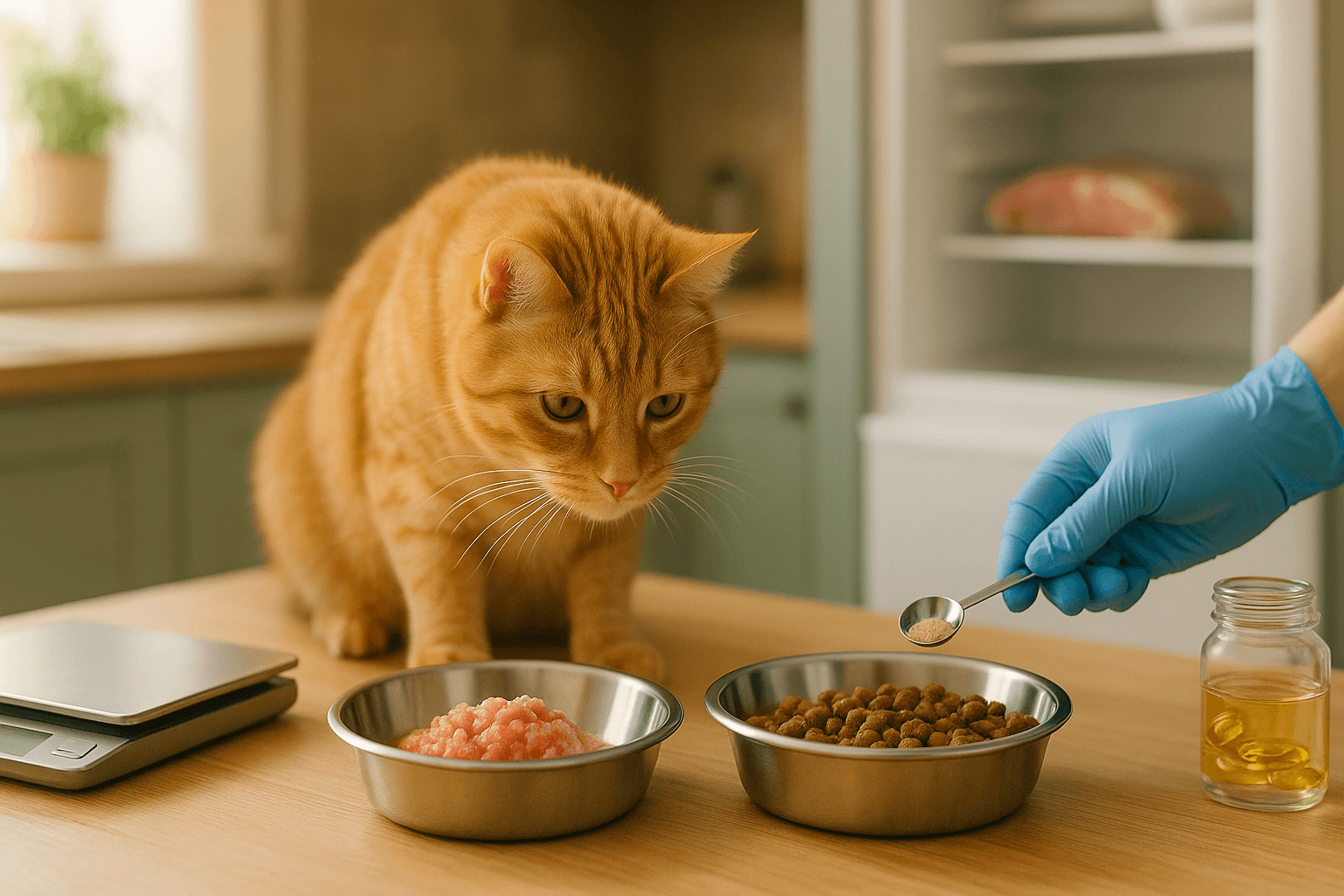
There are a few tools and supplements it’s wise to have on hand before starting. A digital kitchen scale calibrated in grams helps you prepare accurate portions and meet target nutrient ratios. A meat grinder or food processor is useful if you plan to process whole bone or create consistent textures for picky eaters. Stock supplements most commonly needed for homemade raw include taurine powder, a balanced bone or calcium source (e.g., finely ground bone meal or calcium carbonate under vet guidance), and a high-quality omega-3 fish oil or algal DHA source. Keep a small kit with measuring spoons, freezer-suitable containers, labels, and gloves so you can prepare batches safely and consistently.
Step-by-step transition plan (30-day phased approach)
Start the transition slowly and deliberately to give your cat time to adapt to different textures and to minimize digestive upset. The following 30-day phased approach focuses on gradual increases in raw proportion, careful observation, and concrete actions to take if problems arise. This plan assumes your cat has received veterinary clearance and that you’re using either a commercially complete raw diet or a carefully balanced homemade formula with appropriate supplements.
How to transition cats to raw diet: 30-day summary
Begin with very small amounts of raw mixed into familiar food, then increase the raw proportion weekly while monitoring appetite, stool, weight, and behavior. If your cat shows persistent digestive signs, pause the transition, reduce the raw amount, and consult your veterinarian. Schedule follow-up lab work about 6–12 weeks after completing the transition if you make a substantial dietary change.
Week 1 — Assessment and slow introduction (days 1–7)
Begin by assessing your cat’s current total daily calorie intake and feeding schedule. Use food labels or an online calorie calculator to estimate daily calories based on weight, activity level, and body condition. During the first week, mix a very small amount of raw food into one meal per day: aim for about 5–10% of that meal’s volume as raw. Keep the rest of the meal the same brand and type the cat is accustomed to so the change is limited and familiar.
Observe appetite closely and monitor stool consistency, frequency, and odor. Expect minor changes in stool as the gut microbiome adjusts; transient softer stools or slightly looser output for 24–48 hours can occur. If vomiting, severe diarrhea, or marked lack of appetite appears, stop the raw introduction and consult your veterinarian that day. Record daily notes so you can track trends rather than reacting to single episodes.
Week 2 — Increase raw proportion and monitor tolerance (days 8–14)
If week 1 went smoothly, increase the raw portion to roughly 25–30% of the meal volume across one or two meals per day. Maintain the total daily caloric intake to avoid weight fluctuations; if the raw food is calorie-dense, reduce portion size accordingly. This is also a good time to introduce a variety of protein sources if you plan to feed rotating proteins; some cats will accept poultry more readily than rabbit or beef, and variety helps prevent single-protein sensitivities.
Sample menu ideas for this phase include a morning meal of 70% familiar canned food with 30% raw minced chicken (muscle only) and an evening meal of standard diet to keep routine uninterrupted. Continue to check stool daily and weigh your cat at least once mid-week to detect early weight changes. Document any changes in coat texture or energy but expect these to appear over weeks to months rather than days.
Week 3 — Move toward full raw or maintenance ratio (days 15–21)
If your cat tolerates week 2 well, increase raw to the target maintenance ratio you’ve chosen. For owners using a commercial complete raw, this often means moving to 100% raw across meals. For homemade or prey-model feeders, your target might be a 75–85% muscle + organ + bone ratio with supplemental micronutrients as required. Transition the remainder of the dry or canned food out gradually rather than abruptly removing it; for many cats, moving from 30% to 60% to 90% over several days reduces refusals and vomiting.
Picky eaters sometimes need creative approaches: warming food slightly, offering it by hand, or providing a strong-scented topper from the raw mix can help. If digestive upset appears at higher raw percentages — persistent soft stools, blood in stool, or decreased appetite — step back to the previous tolerable ratio for several days and consult your veterinarian about whether to continue. Some cats need a longer period at intermediate ratios before they accept full raw.
Week 4 — Stabilize and test nutrient adequacy (days 22–30)
By week 4 your cat should be eating its intended raw ratio consistently and showing steady weight and normal stools. This is the phase to evaluate the diet’s practical sustainability: are you comfortable preparing the meals, is freezer space sufficient, and does the cat accept planned protein rotations? If you’ve chosen a homemade diet, now is an appropriate time to schedule a follow-up with your veterinarian or a board-certified veterinary nutritionist for review of the formulation and to plan baseline bloodwork if not already done.
Arrange timing for post-transition lab work: a general recommendation is to recheck blood chemistry and a basic hematology panel 6–12 weeks after finishing a major diet change, though this may vary with individual health concerns. If the cat is stable and the diet is a commercial complete raw, you can extend checks to the usual annual schedule while remaining vigilant for weight loss or behavioral changes.
Troubleshooting common issues during transition
Digestive issues are the most frequent reason owners pause or stop raw transitions. For diarrhea without systemic signs (fever, lethargy), reduce the raw proportion and allow the gut to rest on a highly digestible canned food for 24–48 hours, then reintroduce raw gradually. For constipation, ensure adequate hydration and consider increasing moisture via canned food or broths; avoid feeding large amounts of ground bone without veterinary guidance, as this can contribute to impaction in some cats. If your cat refuses raw completely, try simply offering a bite-sized sample by hand, lightly warming the food to release aromas, or blending it with a tiny amount of familiar canned food. Persistent weight loss, repeated vomiting, blood in stool, or marked behavioral change should prompt immediate veterinary evaluation and possible discontinuation of the raw diet.
If you encounter a bacterial concern (for example, household members develop related symptoms), pause raw feeding, consult healthcare and veterinary professionals, and evaluate your hygiene and sourcing practices before resuming. Documentation and steady communication with your veterinarian will minimize risk and help you decide on next steps.
Building balanced raw meals and recipes
Meeting a cat’s nutritional needs on a raw diet requires attention to specific nutrients that cats cannot synthesize or that they require in particular ratios. Protein and fat should provide the majority of calories; taurine is essential and must be supplied either through adequate organ meat (especially heart) or via supplement. Calcium and phosphorus balance is critical for skeletal health; whole bones or properly formulated bone meals maintain the correct calcium-to-phosphorus ratio. Vitamins A and D are fat-soluble and can quickly become excessive if liver is overfed or if supplementation is misapplied, so careful formulation and adherence to tested recipes is essential.
In practical terms, key nutrient targets for adult maintenance raw diets include high-quality animal protein around 30–45% of calories, fat typically making up 40–50% of calories depending on desired energy density, and minimal carbohydrate. Taurine should be provided at approximately 250–500 mg per kg of food or per day depending on formulation and lab guidance; commercial diets list this, whereas homemade diets usually require supplemental taurine. Calcium-to-phosphorus ratios should be in the ballpark of 1.0–1.5:1; organ meats, particularly liver, supply vitamins and trace elements but should generally be limited to about 5–10% of the total diet to avoid vitamin A excess.
Below are sample complete meal templates for adult feline maintenance using a prey-model balance. These templates assume you will use a balancer supplement or add specific micronutrients when needed. Always consult a veterinary nutritionist before committing to long-term homemade feeding.
-
Chicken-based maintenance meal (per 100 g final portion):
- 80 g deboned chicken thigh (muscle)
- 10 g chicken liver (organ)
- 8 g finely ground raw meaty bone or calcium supplement equivalent
- 2 g taurine supplement (adjust per product directions)
-
Turkey and heart rotation meal (per 100 g final portion):
- 75 g turkey breast or thigh (muscle)
- 15 g turkey heart (provides taurine)
- 8 g bone or calcium source
- Optional: 1 g fish oil (DHA/EPA source) if not rotated with oily fish
-
Rabbit/prey-model meal (per 100 g final portion):
- 80 g rabbit muscle meat
- 10 g rabbit liver (or alternate organ)
- 8 g bone meal or finely ground bone
- 2 g feline multivitamin/mineral balancer (per product instructions)
-
Fish-rotation maintenance meal (use sparingly due to thiaminase in some raw fish) (per 100 g):
- 70 g oily fish (sardine or mackerel) muscle
- 15 g fish liver limited to small proportion to avoid vitamin A excess
- 10 g bone or substitute calcium
- 2 g taurine and vitamin E supplement to protect against oxidation
After each sample meal template is a reminder: these are examples and must be adjusted for calorie needs, current body condition, and specific supplement concentrations. A reliable feline multivitamin/mineral balancer made specifically for raw diets can simplify compliance by supplying trace minerals and vitamins that are otherwise tricky to measure.
Supplements and when to use them deserve close attention. Taurine supplementation is non-negotiable in many homemade recipes and should follow product dosing for cats based on daily food weight. Fish oil (or algal DHA) provides long-chain omega-3 fatty acids to support skin and joint health; dose according to the manufacturer and monitor for any signs of gastrointestinal upset. Vitamin E is often paired with fish oil to prevent oxidative damage. Calcium sources must be measured precisely: excessive calcium risks kidney burden and skeletal issues, while too little causes secondary hyperparathyroidism and bone demineralization. Use a formulated balancer or consult a nutritionist if you are not using whole ground bone. When using commercial complete raw diets, supplements are usually unnecessary; check manufacturer statements and lab data.
Monitoring health and long-term care
Long-term success with raw feeding depends on routine monitoring and willingness to adapt. Key metrics to track include body weight, body condition score (BCS), stool quality, coat condition, and behavior. Weigh your cat weekly during the transition and then monthly once stable; use a consistent scale and record values. A visual and tactile BCS assessment every month helps you fine-tune calorie delivery to promote lean muscle maintenance rather than fat gain. Stool should be formed and regular; persistent changes in consistency, color, or the presence of mucous or blood require veterinary attention.
Veterinary check-ins should start with a baseline panel (CBC, chemistry profile, urinalysis) and fecal testing before transition or at the start. After completing a major diet change, a recheck at 6–12 weeks helps detect early metabolic shifts or signs of nutrient imbalance. Annual wellness visits remain essential, and any cat with new symptoms such as increased thirst, changes in urination, persistent vomiting, or weight loss should be examined promptly. If you feed homemade raw long-term, periodic consultations with a board-certified veterinary nutritionist are prudent to review formulations and ensure nutrient adequacy.
Watch for signs of imbalance or deficiency and respond proactively. Lethargy, poor haircoat, or muscle wasting can signal inadequate protein or calorie intake. Dilated cardiomyopathy or exercise intolerance might relate to taurine deficiency in rare cases; prompt blood testing and dietary adjustment are warranted. Issues with bone mineralization, fractures, or dental problems can indicate calcium or vitamin D problems. If you suspect imbalance, temporarily switch to a commercial complete diet while you work with your veterinarian to correct the formulation. Timely intervention often reverses early changes; chronic deficiencies may cause irreversible damage, underscoring the value of regular checks.
Practical tips and lifestyle integration
Picky eaters respond to gradual exposure and positive reinforcement. If a cat refuses a new texture, try mixing a small amount of raw into a spoonful of warmed canned food to increase aroma. Offer raw first thing in the morning when hunger is highest, or try hand-feeding small samples to build acceptance. Rotating proteins gradually helps prevent flavor fatigue and can lower the chance of developing single-protein sensitivities; rotate every two to four weeks once the cat accepts a range of meats.
Budgeting for raw feeding is a practical consideration for many households. Commercial complete raw diets are more expensive than typical canned or dry food but reduce prep time. Homemade feeding can save money if you buy frozen wholesale cuts, use less-expensive cuts, or incorporate organ meats and seasonal sales. Batch-preparing meals, portioning by weight into single-serve containers, and organizing freezer inventory reduce waste. Consider a small deep freezer if space permits — the upfront cost often pays off through bulk purchasing savings.
Travel, boarding, and social situations require planning. If your cat needs boarding, call ahead to confirm the facility’s policy on raw food; some do not accept raw diets for liability or hygiene reasons and may require you to provide sealed, single-serve commercial options. For short trips, pack pre-portioned thawed meals in insulated containers and keep them refrigerated during travel; for longer trips, consider temporary use of a high-quality canned food to avoid logistical issues. When others feed your cat, provide clear written instructions on portion sizes, feeding times, and handling precautions to avoid accidental over- or underfeeding.
Sources, further reading, and resources
For evidence-based guidance, consult organizations and professionals with veterinary nutrition credentials. Board-certified veterinary nutritionists (diplomates of the American College of Veterinary Nutrition or European College of Veterinary and Comparative Nutrition) and veterinary organizations such as the American Veterinary Medical Association publish position statements and resources that explain risks and benefits. Peer-reviewed journals such as the Journal of Feline Medicine and Surgery and the Journal of Animal Physiology and Animal Nutrition have articles examining raw feeding outcomes and nutritional analyses.
Recommended reading includes texts by recognized veterinary nutritionists and reputable handbooks on feline clinical nutrition. Online calculators and recipe tools produced by veterinary nutritionists can help estimate calorie needs and portion sizes, but they should be used alongside professional consultation. When researching brands for commercial raw diets, prioritize companies that provide full nutrient analyses, feeding trials, and third-party pathogen testing results.
FAQ
Q: How long does it take to transition cats to a raw diet?
A: Typical transitions take 2–4 weeks using a gradual phase-in, but some cats need longer; always monitor weight and stool and consult your vet if problems arise
Q: Can kittens be fed a raw diet?
A: Kittens have higher nutrient needs and require complete, balanced raw formulas or veterinary guidance; avoid DIY raw for kittens without consulting a feline nutritionist
Q: Is raw feeding safe for humans in the household?
A: Raw food handling requires strict hygiene to reduce risk of bacterial exposure; pregnant or immunocompromised household members should take extra precautions or avoid contact with raw prep
Q: Do I need to add taurine to a raw diet?
A: Taurine is essential for cats; many homemade raw diets require supplemental taurine unless using a commercial complete raw diet that guarantees adequacy
Q: Will raw feeding cure my cat’s allergies or urinary issues?
A: Some owners see improvements, but raw feeding is not a guaranteed cure; work with your vet to diagnose and manage allergies or urinary disease
Q: How much should I feed during transition?
A: Base portions on current body weight, activity, and body condition using calorie targets; decrease/increase slowly and weigh your cat weekly
Final notes
Transitioning a cat to a raw diet can be rewarding when done carefully, with veterinary collaboration, and with attention to food safety and nutrient balance. Regular monitoring, accurate portioning, and an honest assessment of household risk factors will give you the best chance for a successful long-term feeding plan. Consult your veterinarian to tailor the approach to your cat’s health status and to arrange appropriate baseline and follow-up testing