Introduction
Finding the best self-watering planters for balconies saves time, reduces water use, and keeps container plants healthier through consistent moisture. Choosing the right model matters more on a balcony than in-ground because of wind exposure, load limits, and limited space for root growth. This guide explains why self-watering systems are a great fit for balcony gardening, how to choose one, and how to set it up and maintain it for reliable results.
The information here targets busy plant parents, small-space growers, and anyone who needs lower-maintenance planters without sacrificing plant performance. The article covers the benefits and limits of self-watering planters, selection criteria tailored to balcony conditions, top product styles and their best use cases, step-by-step installation and seasonal care, plant recommendations, cost-versus-value analysis, and a practical FAQ.
Readers will get clear, actionable advice they can apply immediately: which planter types suit their balcony, how to estimate refill intervals, what soil to use, and how to avoid common mistakes that lead to root problems. The focus is on real-world scenarios gardeners face on balconies, such as strong afternoon sun, limited depth, and building rules about load and rail attachments.
Why choose self-watering planters for balconies
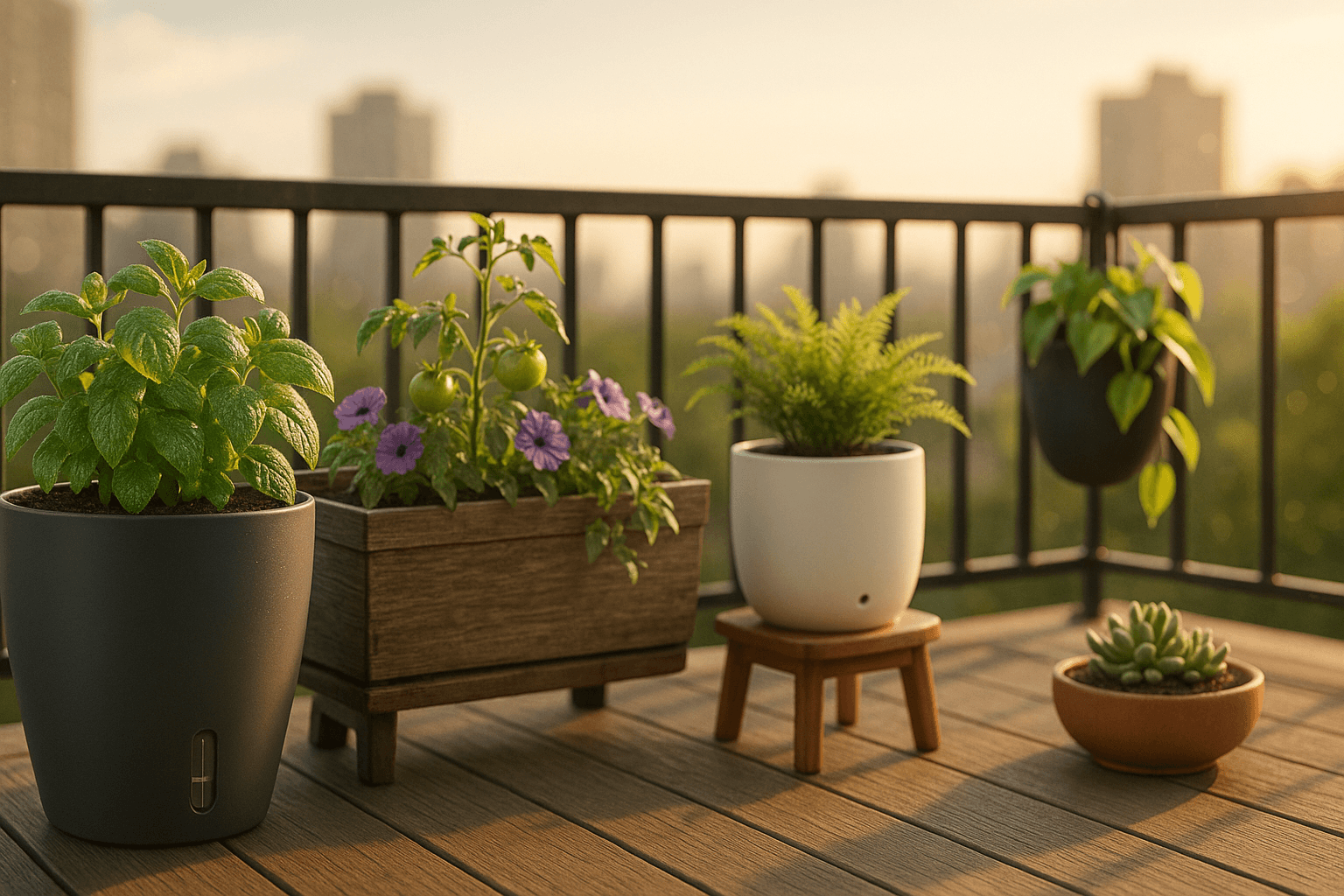
Balconies create unique challenges: containers heat up quickly, wind increases evaporation, and limited space often forces growers to plant more densely. Self-watering planters address several of these issues by delivering water from a reservoir below the soil, which stabilizes moisture and reduces the need for daily attention. They also offer conservation benefits and can extend the window between manual watering during travel or busy weeks.
Beyond convenience, self-watering systems can improve plant health by maintaining a more even moisture profile in the root zone. That stability helps reduce stress on sensitive herbs, leafy greens, and container vegetables—plants that respond poorly to repeated cycles of drought and saturation. For balcony environments with frequent sun and wind, choosing an appropriate self-watering planter can mean the difference between a thriving container garden and frequent plant replacement.
Benefits of self-watering planters on balconies
Self-watering planters extend watering intervals, which is ideal for people with busy schedules or for those who travel during the growing season. Because water is supplied from a reservoir, the soil near the roots stays moister longer than the surface, reducing wilting and improving resilience to heat spikes. Reservoir systems are also more water-efficient: they reduce evaporation from the soil surface and losses from overwatering.
Containers on balconies are often more exposed to wind and sun than ground beds, which accelerates water loss. A self-watering system compensates for that by supplying water directly to the root zone where plants need it most. In addition, many self-watering designs include overflow protection and drainage that help in heavy rain events, preventing standing water in the soil when downpours occur.
How self-watering planters work
Most self-watering planters rely on the same fundamental idea: a separate reservoir that holds water and a mechanism that transfers water from the reservoir into the potting mix as the plants use it. Common mechanisms include wicking systems, capillary mats, and standpipe fillers that feed water into the reservoir. The soil draws moisture up by capillary action, or roots grow downward into a moist zone to access water.
Passive systems operate without pumps or electricity; they depend on gravity and capillary movement. Active systems may include sensors, pumps, or solar-assisted refill mechanisms that regulate moisture more precisely. Many balcony-friendly pots use passive reservoirs because they are simpler, lighter, and less likely to fail. Important components to look for are a refill inlet or top-fill tube, a water level indicator, a drainage overflow to prevent flooding, and an accessible reservoir for cleaning.
Common misconceptions and limits
Self-watering planters are not a cure-all. They cannot fix poor potting mix, inadequate aeration, or improperly sized containers. If the soil mix is too dense or the planter lacks a proper wicking medium, the reservoir can keep roots too wet, which increases the risk of root rot. Proper selection of mix and following manufacturer setup steps are essential.
Another misconception is that self-watering eliminates all top-watering or maintenance. Plants still need occasional top-watering to dissolve accumulated salts and occasional flushing during the season. Some plants—particularly those that prefer dry conditions like many succulents—are not ideal candidates for standard self-watering setups unless the reservoir is minimized and a fast-draining mix is used.
Suitability varies by plant type. Moisture-loving herbs and lettuces typically thrive, while taproot vegetables or plants needing extreme drainage need larger, carefully designed systems. Always match the planter and soil to the plant's water preferences to avoid problems.
How to choose the best self-watering planter for your balcony
Balconies come in many shapes and load capacities, and the best self-watering planter must be chosen with those constraints in mind. Size, reservoir capacity, material, drainage, wind resistance, and aesthetics influence both performance and safety on a balcony. Prioritizing safety first—checking load limits and rail strength—keeps any installation compliant with building rules.
Selecting a planter is a balancing act: large reservoirs reduce refill frequency but increase weight when full; attractive ceramic finishes look great but may be heavy; railing-mount models save floor space but must be secured. The following sections break down the key criteria to guide a practical choice.
Match planter size to balcony space and plant type
Container size determines how much soil is available for roots and how stable the planter will be in wind. Deeper containers accommodate plants with taproots, while wider, shallower troughs are ideal for groups of shallow-rooted herbs and salad greens. On narrow balconies, compact cube planters or vertical towers maximize planting area without obstructing movement.
Think about both depth and width: root depth affects plant choice and crop yields, while width and heft affect wind resistance. When selecting a planter for tomatoes or large peppers, choose a deeper pot (12–18 inches) with a broad base to lower the center of gravity. For herbs and annual flowers, shallower planters 8–10 inches deep often suffice and keep total weight manageable.
Reservoir capacity and refill frequency
Reservoir size translates directly to how often the planter needs to be refilled. A larger reservoir prolongs refill intervals but increases weight and space requirements. As a rule of thumb, small balcony planters (6–8 inch diameter) with a 1–2 liter reservoir may need refilling every 5–7 days in warm weather, while deeper troughs with 6–10 liters can go 10–21 days depending on plants and exposure.
Estimate refill frequency by combining reservoir volume with average daily plant water use. Leafy crops under strong sun and wind can use 0.5–1 liter per day per plant in a medium container; herbs are lower-consuming. When travel or long gaps are required, choose a product rated for longer intervals or consider pairing multiple planters so the weight stays distributed when one is full.
Material and durability for outdoor balcony use
Material choice affects weight, heat retention, and UV resistance. Plastic and UV-stable resin are the most common for balcony planters because they are lightweight, affordable, and durable against sun exposure. Fiberglass is lightweight and strong with a premium look but often costs more. Ceramic or terracotta look classy but can be heavy and are prone to cracking in freeze-thaw cycles unless specially rated.
Metal planters can be stylish but heat rapidly and may need internal insulation or liners to avoid overheating roots. Frost resistance matters in colder climates—choose frost-rated materials or avoid leaving reservoirs with water in unprotected planters during freezing weather. UV stabilizers in plastics prevent brittle failures over several seasons.
Drainage, overflow protection, and wicking design
Proper drainage and overflow are crucial on balconies to avoid water pooling and potential water damage to building elements. Always select planters with a clearly designed overflow outlet or drain plug that prevents the reservoir from overflowing onto balcony floors during heavy rain. Removable wicking inserts or accessible reservoirs make cleaning possible and prevent clogging.
Wicking designs vary: some use a central wick or sponge, others use a capillary mat or a basket-lined soil column that draws water upward. Removable inserts simplify re-potting and maintenance. For rainy climates, an overflow that routes excess water away from rail edges or into an internal tray reduces risks and keeps neighbors and balconies below dry.
Weight, mounting, and wind resistance for rail planters
Balconies impose load limits per square foot; these should be checked before adding heavy planters. Railing-mounted troughs are excellent for saving floor space but must attach securely using manufacturer-specified brackets or straps. Look for locking rail kits or low center-of-gravity designs that reduce tipping risk. For high winds, choose heavier base planters or use brackets that lock to the rail.
When using multiple planters, distribute weight evenly across the balcony to avoid exceeding floor load ratings. In exposed locations consider windbreaks like bamboo screens or place wind-tolerant plants near the edges.
Aesthetic, color, and integration with balcony decor
Planter style helps tie the balcony together: resin with ceramic finishes offers the look of pottery without the weight; modular systems and vertical towers enable design flexibility and can be mixed with hanging planters to add height. Color choices also affect temperature—darker planters absorb more heat, which can accelerate evaporation in hot climates. Light-colored containers help keep root zones cooler in full-sun balconies.
Vertical and modular planters are excellent for maximizing small footprints. Railing planters and slim troughs maintain a neat visual line and make harvesting easy. Consider sightlines, neighbor privacy, and whether plants will block views when choosing height and density.
Price, warranty, and maintenance needs
Higher-priced planters often offer thicker walls, better UV stabilization, and more thoughtful overflow and cleaning access, but budget options can still perform well if you manage expectations. Warranties reflect manufacturer confidence and are helpful if the planter will live outdoors year-round. Consider replacement parts availability—wicks, indicators, or refill tubes—because these components can wear.
Budget planters are suitable for seasonal annuals or trial setups. Invest in durable options for long-term fixtures or for heavy-use installations where refill intervals and cleaning access are important. Evaluate how easy it is to disassemble and clean the reservoir before committing to a purchase.
Top 10 best self-watering planters for balconies
This section outlines ten planter styles well-suited to balcony use. Each product entry begins with a short overview and then practical notes on features, specifications, pros, cons, best use case, and ideal plants. Price ranges reflect typical retail bands and may vary by retailer and optional accessories.
1 - Premium long trough self-watering railing planter
A premium long trough is designed for railing mounting with an extra-deep integrated reservoir. This style emphasizes stability, large capacity, and a neat profile that blends with modern balcony railings. Premium resin construction resists UV and the locking rail kit secures the trough in high winds.
Features and specs:
- Extra-deep reservoir (typically 6–12 L per meter)
- Locking rail bracket kit rated for standard rail profiles
- UV-stable resin with reinforced ribs for strength
- Water level indicator and overflow drain
Pros:
- Strong wind resistance when installed with the locking kit
- Large reservoir reduces refill frequency for mixed plantings
- Clean, linear look that suits herb and vegetable rows
Cons:
- Heavier when full, requires sturdy rail and load check
- Higher price than basic railing trays
Best for: mixed herbs and compact vegetables on wide balconies where a long, continuous bed is desirable
Ideal plants: basil, parsley, lettuce, compact tomatoes, dwarf peppers
Affiliate price range: $60–$180 depending on length and bracket type
2 - Compact cube self-watering planter for small balconies
Compact cube planters are a go-to for tight spaces. They conceal a small reservoir and sit on saucers or low-profile stands. The compact footprint allows them to fit in narrow corners or between chairs while still offering consistent moisture for herbs and annuals.
Features and specs:
- Hidden 1–4 L reservoir depending on cube size
- Saucer-compatible base for indoor/outdoor use
- Simple water-level fill tube and overflow
Pros:
- Fits narrow spaces and small balconies easily
- Affordable and easy to move
- Works well as a group to create a small garden cluster
Cons:
- Limited root depth restricts larger vegetable crops
- Reservoir volumes require more frequent refilling in high heat
Best for: tight balconies, apartment gardeners wanting a small cluster of plants
Ideal plants: parsley, chives, dwarf marigolds, small bedding plants
Affiliate price range: $15–$45 per unit depending on materials
3 - Vertical self-watering planter tower for balcony corners
Vertical towers stack planting pockets around a central reservoir to maximize vertical space. They are modular and allow dense planting of small crops. Water distribution is from a central column that supplies each tier via capillary flow.
Features and specs:
- Central reservoir (typically 6–12 L total) with top-fill tube
- Stacked pockets or removable pots for easy planting
- Modular sections for scaling up or down
Pros:
- Maximizes planting area on small balconies
- Easy to harvest and attractive as a living wall
- Ideal for corner placement out of main traffic
Cons:
- Top tiers may need refilling more frequently in very hot conditions
- Heavy when the central reservoir is full; secure base recommended
Best for: maximizing vertical space and creating a living corner with a small footprint
Ideal plants: strawberries, trailing herbs, salad greens, compact flowers
Affiliate price range: $80–$220 depending on height and module count
4 - Decorative ceramic-look self-watering planter
Ceramic-look resin planters offer the aesthetic of pottery without the weight and fragility. These planters typically include a water-level indicator, drainage plug, and a removable reservoir liner for cleaning. They suit balconies where appearance matters as much as function.
Features and specs:
- Resin body with textured ceramic finish
- Reservoir indicator and drain plug for winterizing
- Available in various sizes from 8" to 18"
Pros:
- Attractive finish without the weight of real ceramic
- Durable and UV-resistant finish
- Low maintenance with easily accessible reservoir
Cons:
- Pricier than plain resin pots
- May still retain heat in very hot sun depending on color
Best for: ornamental displays and small shrubs where look is a priority
Ideal plants: geraniums, begonias, small boxwoods, ornamental flowers
Affiliate price range: $45–$150 depending on size and finish
5 - Hanging/railing self-watering planter with bracket
Hanging or railing planters free up floor space and add layers to balcony gardens. These designs include slim reservoirs and quick-attach brackets that make installation straightforward. Weight limits are smaller, so choose plants accordingly.
Features and specs:
- Slim reservoir with top-fill access
- Secure brackets or hooks for rails and eaves
- Often made of UV-stable resin or lightweight fiberglass
Pros:
- Saves floor space and improves sightlines
- Fast installation with universal brackets on many models
Cons:
- Smaller reservoirs limit plant size and refill intervals
- Must respect weight limits of the railing or hooks
Best for: trailing annuals and small herbs in stacked arrangements
Ideal plants: petunias, calibrachoa, thyme, small trailing nasturtiums
Affiliate price range: $25–$90 per planter depending on bracket system and size
6 - DIY-friendly self-watering planter kit
DIY kits provide parts like a reservoir liner, wicking rope, and perforated basket to build a custom planter. They are cost-effective and flexible for irregular spaces or non-standard containers. DIYers can adapt kits to existing decorative pots to combine aesthetics with functionality.
Features and specs:
- Modular parts: reservoir liner, wick, fill tube, overflow plug
- Instructions for multiple container sizes
- Options to add water level indicators
Pros:
- Customizable and often cheaper than prebuilt systems
- Allows reuse of decorative pots and unique containers
Cons:
- Requires assembly and some monitoring
- Performance depends on chosen soil and wick placement
Best for: DIYers with creative container ideas or odd-sized pots
Ideal plants: mixed herbs, flowers, and small vegetables depending on pot size
Affiliate price range: $12–$45 depending on kit completeness
7 - Lightweight fibreglass trough for balcony boxes
Fiberglass troughs combine large planting capacity with relatively low weight. They often have thin-wall construction with internal reservoirs or optional reservoir trays. Their strength and low weight make them suitable for wider balcony planters and groupings of larger plants.
Features and specs:
- Large capacity troughs (available in 24"–48" lengths)
- Thin-wall fiberglass construction with UV protection
- Optional internal reservoir or bottom tray
Pros:
- Lightweight compared to ceramic or stone
- Good capacity for multiple plants and compact vegetables
Cons:
- Higher upfront cost than basic plastic
- May require care in extreme cold if left outside
Best for: larger balcony boxes housing several vegetables or mixed plantings
Ideal plants: dwarf tomatoes, mixed herbs, compact eggplants, multiple bedding plants
Affiliate price range: $120–$400 depending on length and finish
8 - Insulated self-watering planter for hot balconies
Insulated planters use double-wall construction to buffer roots from high ambient temperatures. These designs keep reservoir water cooler and reduce thermal stress, which benefits heat-sensitive herbs and vegetables on sun-baked balconies.
Features and specs:
- Double-wall insulation with air gap or foam core
- Large reservoir and ventilation to reduce root heat
- Often features a light-colored finish
Pros:
- Protects roots in full-sun, high-heat exposures
- Extends water temperature stability, improving plant health
Cons:
- Bulkier appearance and slightly higher cost
- May take more space due to insulation thickness
Best for: south-facing balconies with strong afternoon sun
Ideal plants: basil, lettuce, peppers, delicate leafy herbs
Affiliate price range: $80–$250 depending on size and insulation level
9 - Collapsible or foldable self-watering planter for seasonal use
Collapsible planters use fabric reservoirs or foldable walls to save storage space off-season. They are popular with renters and gardeners who relocate frequently. Durability varies; look for reinforced seams and robust reservoir liners.
Features and specs:
- Foldable fabric walls with built-in reservoir bag or liner
- Drainage and overflow often through a bottom valve
- Lightweight and easy to store
Pros:
- Space-saving and inexpensive for seasonal gardening
- Great for renters and temporary setups
Cons:
- Durability can be a concern over many seasons
- Reservoir integrity must be checked regularly for leaks
Best for: renters, seasonal gardeners, and temporary balconies
Ideal plants: seasonal herbs, lettuces, annual flowers
Affiliate price range: $20–$80 depending on size and materials
10 - Smart self-watering planter with sensor and app alerts
Smart planters combine reservoirs with moisture sensors and app alerts for precise monitoring. Some include solar-assisted pumps for automated top-up from a separate water source. These are suited to tech-savvy gardeners who prefer data-driven care or long travel windows.
Features and specs:
- Built-in moisture sensors with Bluetooth or Wi-Fi
- Low-water alerts, some models include solar pump assist
- Data logging and app-based schedules
Pros:
- Precise monitoring reduces guesswork
- Useful for extended travel or complex mixes of plants
Cons:
- Higher cost and potential tech maintenance
- Sensors may need calibration and occasional replacement
Best for: frequently away gardeners and those who want remote monitoring
Ideal plants: mixed container gardens where individual plant needs vary
Affiliate price range: $120–$350 depending on features and connectivity
Setup guide: installing self-watering planters on balconies
Installing self-watering planters on a balcony requires attention to location, load, and manufacturer directions. Proper setup ensures the reservoir works as intended and reduces maintenance problems later. The following checklist and best practices simplify that process and help prevent common mistakes like blocked overflow, poor soil mixes, or insecure mounting.
Step-by-step setup checklist
Begin by inspecting the planter and reading the manufacturer instructions for any model-specific steps. Confirm the reservoir is intact, the overflow outlet works, and any wicking insert or liner is present and correctly placed. Double-check that the water level indicator functions before planting.
- Choose the location based on sunlight, wind exposure, and load-bearing capacity of the balcony.
- Inspect or install any rail brackets securely using the kit provided; test for wobble and locking engagement.
- Prime wicking materials by moistening them before planting so they begin working immediately.
- Mix a high-quality potting mix with good aeration—add perlite or coir as needed to prevent compaction.
- Plant to the correct depth, ensuring crowns are above the soil line and root systems spread into the soil column.
- Fill the reservoir per manufacturer guidance and observe the water-level indicator to confirm capillary uptake begins.
- Place the planter on a stable surface or secure the rail brackets, and monitor soil moisture for the first few days to adjust the soil mix if necessary.
Watering and filling best practices
Use the water-level indicator to schedule refills instead of guessing. During early season and cooling weather, plants use less water, so refill intervals lengthen. In peak summer with hot sun and wind, expect more frequent refilling. Top-watering occasionally is beneficial to flush salts from the soil; do so sparingly and allow excess to drain through overflow.
If measured fertilization is required, use slow-release formulas in the potting mix and supplement with diluted liquid feed as needed. When using liquid feed from the reservoir, follow the planter manufacturer's guidance since concentrated fertilizers in the reservoir can harm roots or encourage algae.
Seasonal maintenance and winterizing
Before the first frost, drain reservoirs and remove trays or liners that retain water to avoid freeze damage. Clean and dry removable reservoir components and store lightweight planters indoors if possible. For planters that must stay outside, insulate the reservoir and add a small layer of mulch to reduce freeze-thaw cycling. Move tender plants indoors or take cuttings to overwinter.
In spring, inspect for cracks, clean the reservoir and wicks, and replace degraded parts. Re-pot if root-bound and refresh potting mix if it has degraded over previous seasons.
Cleaning and preventing algae and mosquito breeding
Routine reservoir cleaning prevents algae build-up and mosquito habitat. Rinse reservoirs with a mild bleach solution (1:10 bleach to water) and rinse thoroughly, or use non-toxic biological controls safe for plants if preferred. Cover fill openings with fine mesh to reduce debris and egg-laying access. Regularly scrub visible algae from soil surfaces and flush the soil occasionally with fresh water to reduce stagnant conditions.
Best plants for self-watering balcony planters
Selecting the right plants for self-watering systems increases success. Most moisture-loving herbs, leafy greens, and many edible vines adapt well, while plants that demand dry roots—most succulents and certain Mediterranean herbs—require special attention or modified setups. Matching plant water needs to the planter design prevents stress and limits maintenance.
Herbs that thrive
Many culinary herbs adapt well to consistent moisture, but their preferences vary and should be matched to the planter system. Basil loves consistent moisture and fares excellently in self-watering planters. Mint thrives in moist soils but can become invasive in large troughs, so contain it or use separate pots. Chives and parsley perform reliably with steady moisture, while oregano and thyme prefer a slightly drier root zone and do better with smaller reservoirs or added drainage amendments.
When grouping herbs, match plants by moisture preference to avoid over- or under-watering particular species. Combining basil and chives works well; combining thyme and mint does not.
Vegetables and salad greens
Lettuces, spinach, and other leafy greens respond positively to steady moisture and produce more tender leaves when water stress is minimized. Compact or determinate tomatoes and dwarf pepper varieties perform well in deep self-watering planters that provide stable moisture without drowning the root crown. For larger fruiting crops, ensure sufficient depth and support for stems and fruit loads.
Root vegetables like carrots and beets can be grown in deeper troughs but require loose, stone-free mix to avoid misshapen roots. Succession planting works well in larger troughs to keep a continuous harvest across the season.
Flowers and ornamentals
Many annual bedding plants thrive in self-watering planters because consistent moisture helps maintain continuous bloom and vigor. Petunias, calibrachoa, begonias, and impatiens appreciate stable conditions and tend to flower more prolifically when water is steady. Perennials in containers may also benefit but check winterizing needs.
Succulents and cacti guidance
Most succulents prefer drier conditions and are not ideal for deep self-watering reservoirs. If using self-watering planters for succulents, choose a very shallow reservoir, use a fast-draining cactus mix with added grit, and check that the wicking system does not keep the root zone too wet. Alternatively, use a hybrid approach: a small inner reservoir with excellent drainage and minimal surface moisture retention.
Climbers and trailing plants
Climbing and trailing plants need structural support and even weight distribution, particularly when grown in railing planters or hanging systems. Secure trellises or use wall-mounted supports and avoid heavy top-heavy plantings on fragile railings. Trailing plants like nasturtiums and certain beans look attractive in long troughs and benefit from steady moisture for continuous growth.
Cost vs value analysis: are self-watering planters worth it for balconies
Investing in self-watering planters is a balance between upfront cost, time savings, water savings, and plant performance. For busy gardeners or those who travel, the convenience alone can justify the expense. For renters or seasonal gardeners, a DIY kit or collapsible planter provides much of the functional benefit at a lower cost. Evaluating return on investment involves calculating time saved on watering, reduced replacement of stressed plants, and reduced water use over a season.
Durability and replaceable parts factor heavily into value. A mid-range durable resin planter with a robust reservoir and replaceable wick will typically outlast a cheap plastic pot and perform better, reducing the likelihood of plant failure in a critical season. For long-term installations, investing in quality materials and secure mounting increases safety and lowers lifetime cost.
Calculating ROI for time saved and water saved
Estimate time saved by counting visits to water during a season and multiply by the gardener's hourly value or compare to the cost of hiring a plant sitter. Water savings can be estimated by comparing meter readings or based on local utility rates when switching from daily top-watering to reservoir-based watering. In many climates, a well-designed self-watering planter reduces irrigation volume by 20–50% compared with routine surface watering.
Longevity and when to replace parts
Replace wicking components and indicators every 2–5 years depending on wear, and inspect reservoirs for cracks annually. Resin planters with UV stabilizers often last 5–10+ years, while fabric and collapsible models may need replacement more frequently. Budget accordingly for occasional component replacements.
When to DIY a self-watering system instead of buying
DIY systems make sense when you have unique container sizes, want to reuse attractive pots, or need a low-cost seasonal setup. Kits and simple reservoir methods can deliver strong performance for herbs and flowers. For railing-mounted systems or heavy-duty installations, however, buying a purpose-built product with tested brackets and overflow protection is recommended for safety and warranty coverage.
Where to buy and what to look for when purchasing
Choosing where to buy affects warranty, return options, and the ability to inspect planters beforehand. Online marketplaces offer wide selections and reviews, while local garden centers provide hands-on inspection and immediate pickup. Second-hand options are budget-friendly but require careful inspection for reservoir integrity and cleanliness before reuse.
Best online retailers and marketplaces
Large online marketplaces offer broad selection and user reviews that help compare real-world performance across brands and styles. Manufacturer-direct purchases sometimes include longer warranties and replacement parts availability. Specialized garden retailers often stock premium options and accessories like rail kits and drainage adapters.
Buying local: garden centers and custom fabricators
Local garden centers allow inspection of material quality, color accuracy, and bracket fit before purchase. Custom fabricators can produce made-to-measure solutions for unusual rail types or specific design needs. Local purchases also often support local return and warranty handling, which simplifies replacements if defects occur.
Upcycling and second-hand options
Second-hand planters can be an affordable route but require careful checks: fill the reservoir with water and watch for leaks, inspect visible wicking materials for mold or breakage, and sanitize reservoirs before adding soil. Upcycling decorative containers with a DIY kit can yield unique results at much lower cost than new premium planters.
FAQ - Frequently asked questions about best self-watering planters for balconies
This FAQ addresses common practical concerns with concise, usable answers tailored to balcony gardeners. Each answer focuses on actionable guidance that readers can apply immediately to select, use, or troubleshoot a self-watering system.
What are the best self-watering planters for balconies
Short answer: The best models combine adequate reservoir capacity, secure mounting for balcony use, good drainage and overflow protection, durable UV-resistant material, and a reliable wicking system. For tight spaces, choose a compact cube; for rail usage a railing trough with locking brackets works best; and for maximizing vertical area a self-watering tower is ideal. Matching planter size and reservoir volume to your plants and balcony conditions determines the optimal choice.
How do self-watering planters work on balconies
Short answer: They store water in a reservoir beneath the soil and use a wicking system or capillary mechanism to deliver consistent moisture to roots, reducing refill frequency and evaporation. Passive systems rely on capillary movement, while some active or smart systems use sensors or pumps for precise control.
Will self-watering planters prevent overwatering on a balcony
Short answer: They help prevent surface overwatering by providing stable moisture from below, but improper soil mix, blocked drainage or continuous top-watering can still cause root issues. Use a well-aerated potting mix, ensure overflow ports are clear, and avoid constant top-watering to reduce overwatering risks.
Can I grow vegetables in self-watering planters on a balcony
Short answer: Yes. Many vegetables, including lettuces, herbs, dwarf tomatoes and peppers, do well when the planter provides deep enough root space and consistent moisture. Match plant depth requirements to the container and provide support for fruiting crops.
How often do I need to refill a self-watering planter on a balcony
Short answer: Depends on reservoir size, plant water use, sun and wind exposure, and season. Typical refill intervals range from 5 days to 3 weeks. Choose reservoir size based on how frequently you want to refill and consider grouping planters to balance weight when full.
Are self-watering planters good for small balconies
Short answer: Yes. Look for compact, vertical or railing-mounted designs with secure attachment options and appropriate weight considerations. Vertical towers and railing troughs are excellent for maximizing planting area on small balconies.
Can I make a DIY self-watering planter for my balcony
Short answer: Yes. DIY kits and simple reservoir methods using wicking rope and a water container are effective. Ensure stable mounting, add overflow protection to prevent leaks, and prime wicking materials during setup for reliable performance.
How do I winterize self-watering planters on a balcony
Short answer: Drain reservoirs, clean components, either move planters to a protected area or insulate and secure them if left in place. Remove sensitive plants or take cuttings indoors and store removable parts to prevent freeze damage.
Do self-watering planters attract mosquitoes on balconies
Short answer: Properly designed planters with sealed reservoirs, mesh covers, or regular maintenance reduce mosquito breeding. Clean reservoirs periodically, use fine mesh over openings, and consider biological larvicides where necessary to prevent mosquito development.
Which materials are best for balcony self-watering planters
Short answer: UV-stable resin and fiberglass offer lightweight durability, ceramic-look resin offers aesthetics without the weight, and metal may heat up too much unless insulated. Choose frost-rated materials for cold climates and invest in quality fasteners for railing-mounted units.
Closing recommendations
Self-watering planters are a powerful option for balcony gardeners who want consistent performance, reduced daily chores, and better conservation of water. Selecting the right system depends on balcony size, exposure, load limits, and the kinds of plants intended. Carefully matching planter capacity and mechanics to plant needs prevents common problems and yields healthier, more productive containers.
Prioritize secure mounting, proper potting mix, and accessible overflow and cleaning access when choosing a model. For small balconies, compact cubes, vertical towers, and railing troughs offer excellent solutions. For long-term installations, invest in durable materials and replaceable parts to protect the investment. With the right system and maintenance routine, a balcony can sustain a lush, productive garden with considerably less effort.