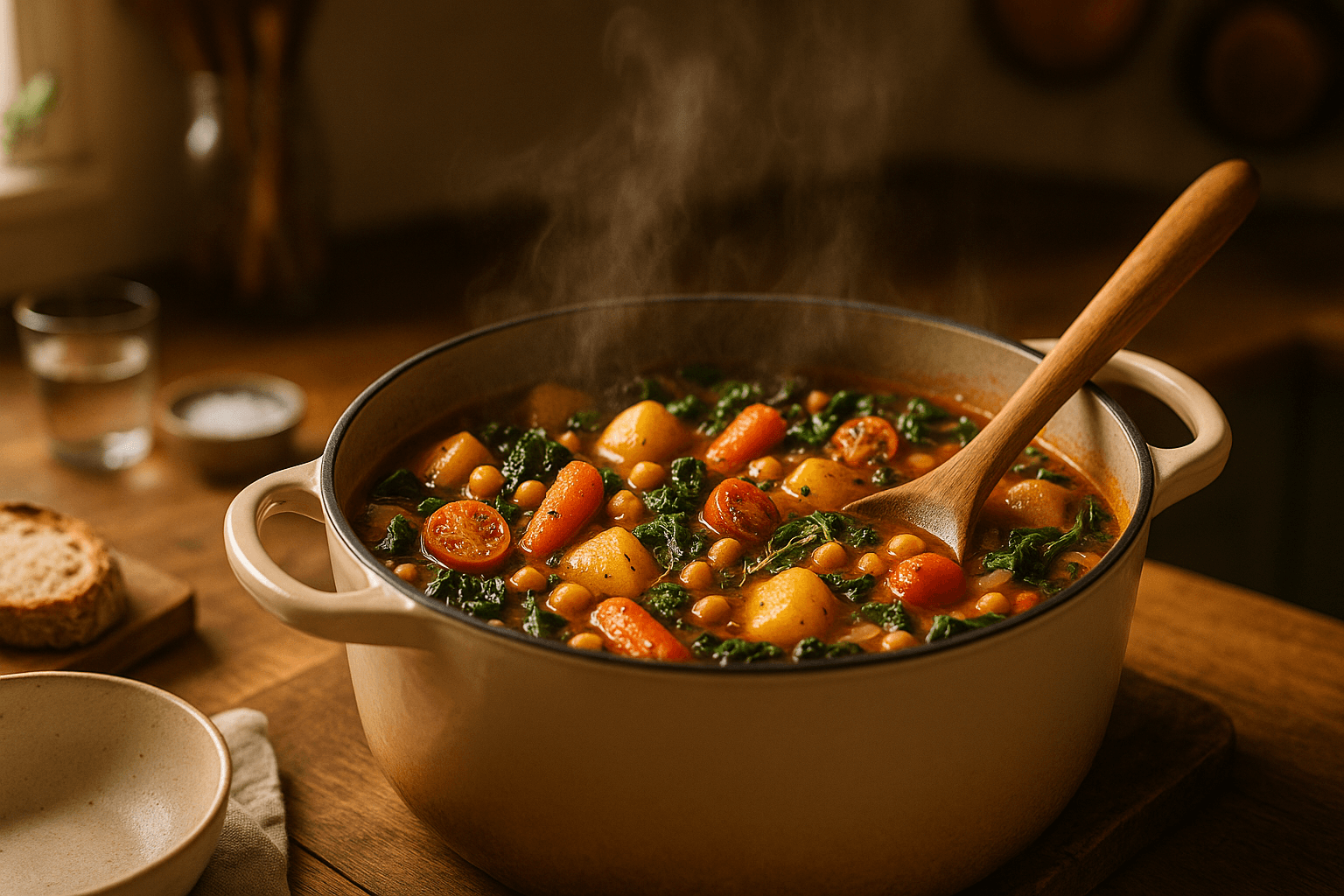
Introduction
Weeknight dinners should be fast, satisfying, and leave you with time for the rest of your evening. This guide to the best weeknight one pot vegetarian stews delivers exactly that: bold flavor, minimal cleanup, and recipes built to finish in about 20 to 45 minutes. You’ll find quick recipes, pantry-friendly swaps, protein-boosting suggestions, and clear meal-prep advice so you can get a nourishing stew on the table even after a long day. Read on to discover ten dependable one-pot stews and the practical techniques that keep them tasting like you spent all afternoon cooking.
Why one-pot vegetarian stews are ideal for weeknights
One-pot stews suit weeknights because they reduce the number of pots, pans, and dirty dishes you face after dinner. A single, heavy-bottomed pot lets you layer flavors—sauté the aromatics, bloom spices, then simmer legumes and vegetables—so what tastes rich and complex actually requires minimal active time at the stove. They’re forgiving when you swap ingredients, which means you can adapt a recipe to whatever’s in your pantry or that leftover roast vegetable you want to use up. Finally, stews scale easily: double the batch for leftovers, freeze portions for future dinners, or convert a hearty weekday pot into lunches for the week.
How to use this guide
This guide is arranged to help you find the right stew by cook time, main protein source, or dietary need. Start by scanning the Top 10 section if you want a recipe quickly, or use the pantry and time-saving sections if you’re planning a batch-cook session. Each recipe includes an overview, a realistic cook time, difficulty level, key ingredients, protein expectations, dietary notes, quick tips for success, and a few variations so you can tailor the dish to what you have.
If you have dietary filters—vegan, gluten-free, or high-protein—read the short notes at the top of each recipe and the Protein, nutrition and dietary swaps section later in the article. The goal is to help you pick or modify a stew without guesswork and to give you confidence to improvise when a weeknight requires it.
Top 10 best weeknight one pot vegetarian stews
1. Hearty Lentil and Root Vegetable Stew
Earthy, filling, and built around brown or green lentils and a mix of root vegetables, this stew feels like comfort food without fuss. The lentils hold shape, giving each spoonful a satisfying bite while potatoes, carrots, and parsnips soak up the broth and tomato paste. Smoked paprika adds warmth and a subtle smokiness, which makes the stew feel heartier than its pantry-friendly ingredient list suggests. This recipe works well if you want something stick-to-your-ribs that’s still fast enough for a weeknight.
- Cook time: 35 to 40 minutes
- Difficulty: easy
- Key ingredients: brown or green lentils, low-sodium vegetable broth, tomato paste, smoked paprika, carrots, parsnips, potatoes
- Protein per serving: high (lentils)
- Dietary notes: vegan, can be gluten-free
- Quick tips: rinse lentils and check for debris before cooking; add hardy root veg first and stir in chopped greens like kale or chard in the last 5 minutes
- Variations: substitute red lentils for a creamier texture, or stir in coconut milk for richness
2. Chickpea, Spinach, and Tomato One-Pot Stew
This Mediterranean-style stew is a weekday hero because it relies heavily on canned goods and finishes quickly. The tang from crushed tomatoes and lemon brightens the naturally earthy chickpeas, while fresh spinach wilts in at the end for color and vitamins. Cumin and garlic keep the flavor profile warm without requiring long simmering. It’s the kind of pot you can finish while the pasta water comes to a boil or while you fold laundry.
- Cook time: 20 to 25 minutes
- Difficulty: very easy
- Key ingredients: canned chickpeas, crushed tomatoes, garlic, ground cumin, fresh spinach, lemon
- Protein per serving: medium-high (chickpeas)
- Dietary notes: vegan, gluten-free
- Quick tips: use canned chickpeas for speed—rinse them to reduce sodium—and squeeze lemon at the end to lift all the flavors
- Variations: add kalamata olives or finish with crumbled feta for a non-vegan option
3. Creamy Coconut Sweet Potato and Red Lentil Stew
This Southeast-inspired stew balances the sweetness of sweet potato with the silky body that red lentils bring when they break down. Coconut milk softens spices and creates a luscious texture without dairy, and curry powder or a homemade masala gives that gentle warmth. It’s forgiving: red lentils act as a natural thickener, so even if you can’t babysit the pot the whole time, it will still come together.
- Cook time: 30 to 35 minutes
- Difficulty: easy
- Key ingredients: red lentils, diced sweet potato, coconut milk, curry powder, onion, garlic
- Protein per serving: medium
- Dietary notes: vegan, gluten-free
- Quick tips: red lentils cook quickly and break down; if you like a chunkier stew, add more sweet potato or reduce the lentil quantity
- Variations: fold in spinach or kale at the end for freshness and color
4. White Bean, Kale, and Mushroom Stew
Think rustic Italian flavors with the warm earthiness of cremini or shiitake mushrooms and the creamy bite of cannellini beans. This stew earns depth by sautéing mushrooms until they’ve released and reabsorbed their liquid; that caramelization yields substantial umami even without meat. Rosemary, thyme, and a splash of white wine (optional) raise the flavor profile, and kale tosses in near the finish so it keeps some texture.
- Cook time: 30 to 40 minutes
- Difficulty: easy
- Key ingredients: cannellini beans, cremini or shiitake mushrooms, kale, onion, rosemary, vegetable broth
- Protein per serving: high
- Dietary notes: vegan if you omit cheese, gluten-free
- Quick tips: cook mushrooms until nicely browned for deeper flavor and add beans towards the end if using canned; add a finish of grated Parmesan only if not vegan
- Variations: deglaze the pan with white wine for extra brightness or add a spoonful of tomato paste for acidity
5. Smoky Black Bean and Sweet Corn Stew
This Tex-Mex inspired pot is a weeknight winner because it delivers big flavor with minimal prep. Black beans and sweet corn form the sturdy base; bell pepper and onion add sweetness and texture, while smoked paprika or a chipotle pepper in adobo brings the smoky heat. It’s flexible: serve it thick over rice, ladled into a warmed tortilla, or topped with avocado for creaminess.
- Cook time: 25 to 30 minutes
- Difficulty: easy
- Key ingredients: black beans (canned), sweet corn (frozen or canned), bell pepper, smoked paprika or chipotle, fire-roasted tomatoes
- Protein per serving: high
- Dietary notes: vegan, gluten-free
- Quick tips: use fire-roasted tomatoes for extra depth and finish with cilantro and a squeeze of lime
- Variations: add quinoa or brown rice for a one-pot grain-and-bean solution
6. Moroccan Chickpea and Carrot Tagine-Style Stew
A spice-forward stew inspired by North African tagines, this one balances sweet carrots with warm spices like cumin, coriander, and a whisper of cinnamon. Preserved lemon or a lemon zest finish gives signature brightness, and harissa can be added for heat if you like it spicy. Toast the spices briefly in oil to release their aroma and expect a fragrant, complex weeknight meal.
- Cook time: 35 to 40 minutes
- Difficulty: medium
- Key ingredients: canned chickpeas, carrots, cumin, coriander, cinnamon, optional harissa or preserved lemon
- Protein per serving: medium-high
- Dietary notes: vegan, gluten-free
- Quick tips: always toast whole spices or warm ground spices briefly in oil to bloom their flavor; add preserved lemon last for a bright zing
- Variations: stir in roasted butternut squash or chopped dried apricots for an aromatic twist
7. Tuscan White Bean and Tomato Stew with Spinach
This rustic stew channels Tuscan pantries with cannellini beans, crushed tomatoes, garlic, and a handful of herbs. It pairs beautifully with crusty bread or polenta and works as a hearty family dinner. Simmer gently to let the flavors marry: slow, low heat yields the best texture for beans and keeps tomatoes from tasting acidic.
- Cook time: 30 minutes
- Difficulty: easy
- Key ingredients: cannellini beans, crushed tomatoes, fresh spinach, thyme or rosemary, garlic
- Protein per serving: high
- Dietary notes: vegan if omitting cheese, gluten-free
- Quick tips: simmer low and slow for the best texture and stir in greens at the end to preserve color
- Variations: add roasted garlic or sun-dried tomatoes for deeper flavor
8. Curried Cauliflower, Pea, and Potato Stew
This Indian-inspired one-pot stew is warming, fragrant, and quick to assemble. Cauliflower and potatoes give body while peas add a pop of sweetness and color; spices like garam masala and turmeric deliver warmth and a golden hue. If you want more protein, stir in chickpeas or cubes of tofu late in the process. This pot is a great way to get complex flavors on the table without long cooking times.
- Cook time: 30 to 35 minutes
- Difficulty: easy
- Key ingredients: cauliflower, peas (frozen), potatoes, garam masala, turmeric, onion, garlic
- Protein per serving: low-medium, boostable with chickpeas or tofu
- Dietary notes: vegan, gluten-free
- Quick tips: brown spices in oil first to intensify the aroma and add fresh cilantro and lime at the end
- Variations: finish with a dollop of yogurt or coconut yogurt for creaminess
9. Peanutty West African-Inspired Vegetable Stew
This stew uses peanut butter to create a rich, slightly sweet body that clings to vegetables like sweet potato and kale. Tomatoes and aromatics anchor the flavor while the peanut butter provides both thickness and a gentle nutty depth. It’s a great way to introduce a new flavor profile into your weeknight rotation without complicated steps.
- Cook time: 35 minutes
- Difficulty: medium
- Key ingredients: sweet potato, canned tomatoes, peanut butter, greens (collard, kale, or spinach), onion
- Protein per serving: medium
- Dietary notes: vegan if made with vegetable broth, naturally gluten-free
- Quick tips: premix peanut butter with hot broth in a small bowl before stirring into the pot to avoid clumping
- Variations: add smoked tofu or tempeh for an extra protein boost and a heartier texture
10. Miso, Tofu, and Shiitake Mushroom One-Pot Stew
This umami-forward stew leans on miso and shiitake mushrooms for deep savory flavor and silky tofu for protein. It comes together quickly and feels lighter than many legume-based stews, making it a great option if you want something restorative midweek. Add delicate greens and scallions at the end; add miso off the heat to preserve its probiotic character.
- Cook time: 25 to 30 minutes
- Difficulty: easy
- Key ingredients: white or yellow miso, shiitake mushrooms, firm or silken tofu, scallions, vegetable broth or dashi alternative
- Protein per serving: high
- Dietary notes: vegetarian or vegan if using vegan miso and dashi alternative, gluten-free if miso is certified
- Quick tips: dissolve miso in a bit of warm broth and stir in off heat to protect flavor and enzymes
- Variations: serve with shirataki or wheat noodles, or add bok choy for extra greens
Essential pantry and fridge staples for weeknight stews
A well-stocked pantry makes weeknight stews possible with short notice; you’ll be surprised how far a handful of staples will stretch. Keep several types of canned legumes, both red and brown lentils, and a couple of canned tomato options on hand. Low-sodium vegetable broth allows you to control salt, and tomato paste adds umami and body. Aromatics like onions, garlic, and fresh ginger form the backbone of most pots, while a small spice selection—smoked paprika, cumin, curry powder, garam masala, coriander—covers many global profiles. Having a jar of olive oil, lemon or vinegar, and quick vegetables such as potatoes, carrots, and frozen peas will get most recipes across the finish line. For thickening or enriching, store coconut milk and a jar of peanut butter.
Time-saving techniques and meal-prep tips
Shortcuts keep stews rapid without sacrificing flavor. Canned beans and pre-chopped frozen vegetables can cut a long-simmer recipe to 20 minutes, and boxed lentils or quick-cooking red lentils reduce the need for pre-soaking. Use one-pot layering: always start by sautéing aromatics until soft, add spices to bloom their oils, then add liquids and the densest vegetables first. Finish with quick-cooking greens and acid to brighten the pot. Batch cooking stews and freezing them in portioned shallow containers makes weekday lunches effortless; label each container with date and reheating instructions. Finally, make a tomato-lentil base on a free weekend—freeze it in single portions and transform it into multiple different stews by adding varying vegetables, proteins, and spices during the final reheat.
Protein, nutrition and dietary swaps
Vegetarian stews can be protein-rich and balanced if you plan them with legumes, soy, or whole grains in mind. Lentils and beans are obvious workhorses; add tempeh or firm tofu for concentrated protein and different texture; edamame is an easy boost for Asian-style pots. For vegetarian (not vegan) preferences, finishes like Parmesan add umami and creaminess, but nutritional yeast or vegan cheeses offer similar satisfaction without dairy. Most stews are naturally gluten-free, but always check broth labels and sauces like soy or miso, which can contain gluten; use tamari or certified gluten-free miso when needed. To control sodium, choose low-sodium broth and delay salting until the end so you can taste as you go.
Storing, freezing and reheating best practices
Proper cooling and storage keep your weeknight stews safe and tasty. Allow a pot to cool slightly, then transfer to airtight containers within two hours to minimize time in the temperature danger zone. When freezing, leave a small headspace in containers because liquids expand; label jars with the date and contents. Most stews freeze well for up to three months. Reheat gently on the stove and add water or stock if the stew has become thick; if reheating from frozen, thaw overnight in the fridge or simmer slowly covered to avoid scorching. Keep in mind that potatoes can change texture after freezing—consider par-cooking them before freezing or adding fresh potatoes when reheating. Dairy finishes may separate after freezing; add them fresh after reheating for the best mouthfeel.
Troubleshooting common stew problems
If a stew ends up too thin, simmer it uncovered to reduce liquid or blend a portion and stir it back in for immediate thickness without extra ingredients. If a stew is too thick, add hot broth or water incrementally while reheating until you reach the desired consistency. For bland stews, adjust with three pillars: salt, acid, and heat. A pinch of salt, a bright squeeze of lemon or splash of vinegar, and a small dash of hot sauce or extra spice can fix most flat pots. To avoid mushy vegetables, add delicate ingredients such as spinach, peas, or zucchini in the last five minutes of cooking; reserve quick-cooking components and fold them in off heat when possible.
Serving suggestions and side dishes
Stews can be a whole meal on their own, but pairing them thoughtfully elevates both texture and satisfaction. Crusty bread is the obvious, comforting partner for tomato-based and bean stews, while rice or steamed quinoa completes grain-and-bean pots and absorbs broth. Warm corn or flour tortillas are perfect with smoky black bean stews, and polenta or mashed potatoes make a luxurious bed for Tuscan-style pots. Fresh toppings—chopped herbs, a dollop of yogurt or coconut yogurt, a sprinkle of toasted seeds, or lemon wedges—add brightness and texture. A simple green salad with a tangy dressing balances the richness of heavier stews and adds freshness to the meal.
On-page SEO and content optimization checklist
This article is optimized to help readers and search engines find actionable weeknight stew solutions quickly. The title tag and H1 use the primary keyword to clearly signal the article’s topic. The meta description is concise and contains the keyword while promising the main benefits. Use the suggested slug for clarity and SEO: best-weeknight-one-pot-vegetarian-stews. Headings include natural variations—one pot stews, weeknight vegetarian stews, quick vegetarian stews—so readers scanning the page can find what they need.
Include internal links to related site resources such as a vegetarian pantry staples post, a batch-cooking guide, and a collection of best weeknight vegetarian dinners. For credibility, add external references in your CMS to trusted sources on plant-based protein, lentil cooking times, and food safety for freezing. Structure recipes using Recipe schema and include FAQ schema for the FAQ below. Use a single hero image and 4–6 plated photos that match the featured stews; descriptive alt text should include phrases like best weeknight one pot vegetarian stews.
FAQ - Frequently asked questions
Are one-pot vegetarian stews healthy for weeknight dinners?
Yes, they can be very healthy when you build them with legumes, a variety of vegetables, whole grains, and healthy fats. Combining beans or lentils with vegetables gives you fiber, plant protein, and micronutrients; finishing with olive oil, avocado, or nuts adds beneficial fats. Rotating the types of vegetables and legumes you use ensures a broader nutrient profile across the week. Watch portion sizes and sodium if you’re monitoring those specifically, but generally, a thoughtfully composed stew is a nutrient-dense, low-fuss dinner option.
How long do vegetarian stews take to cook on a weeknight?
Many one-pot vegetarian stews finish in 20 to 45 minutes depending on the protein and vegetable choices. Using canned beans or red lentils cuts active cooking time significantly, while dry brown lentils and denser root vegetables require closer to the 35–45 minute range. Plan by scanning the recipe’s cook time and prepping all ingredients beforehand; a quick mise en place often transforms a 30-minute pot into a 20-minute dinner.
Can I make these stews vegan and gluten-free?
Most recipes in this guide are already vegan and gluten-free, but be mindful of certain ingredients that can introduce animal or gluten-derived elements. Many miso pastes and soy sauces contain gluten—choose certified gluten-free miso or tamari when needed. Vegetable broth labels can also vary, so opt for low-sodium, certified gluten-free broth if you have strict dietary needs. For cheese finishes, swap nutritional yeast or vegan cheese to maintain a vegan dish.
What's the best way to add protein to vegetarian stews?
Lentils and beans are the simplest ways to boost protein, and they integrate seamlessly into most stews. Tempeh and tofu are excellent for adding concentrated protein and texture; cube and pan-sear them before adding to the pot for better mouthfeel. Edamame and seitan are additional options depending on the cuisine you’re aiming for. If you want a quick protein bump, stir in a drained can of beans or a cup of tofu cubes during the last 10 minutes of cooking.
Can I freeze these stews and how will they reheat?
Yes. Portion stews into airtight, freezer-safe containers and freeze for up to three months. Thaw overnight in the refrigerator for best results or reheat gently from frozen on the stove, adding liquid as needed. Expect some texture changes—potatoes may become grainy and dairy finishes may separate after freezing—so when possible, add potatoes or dairy at reheating time rather than before freezing. Fresh herbs and citrus finishes are best added after reheating.
How can I make stews more flavorful without extra salt?
Focus on umami-rich ingredients and acid: tomatoes, roasted vegetables, mushrooms, miso paste, and nutritional yeast all bring savory depth. A splash of citrus juice or a touch of vinegar brightens flavors and tricks the palate into perceiving more saltiness. Toasted spices and browned aromatics deliver aroma that keeps food interesting without relying exclusively on salt. Small additions like a spoonful of tomato paste or a few drops of soy sauce or tamari (gluten-free if needed) can also amplify savory notes.