Introduction
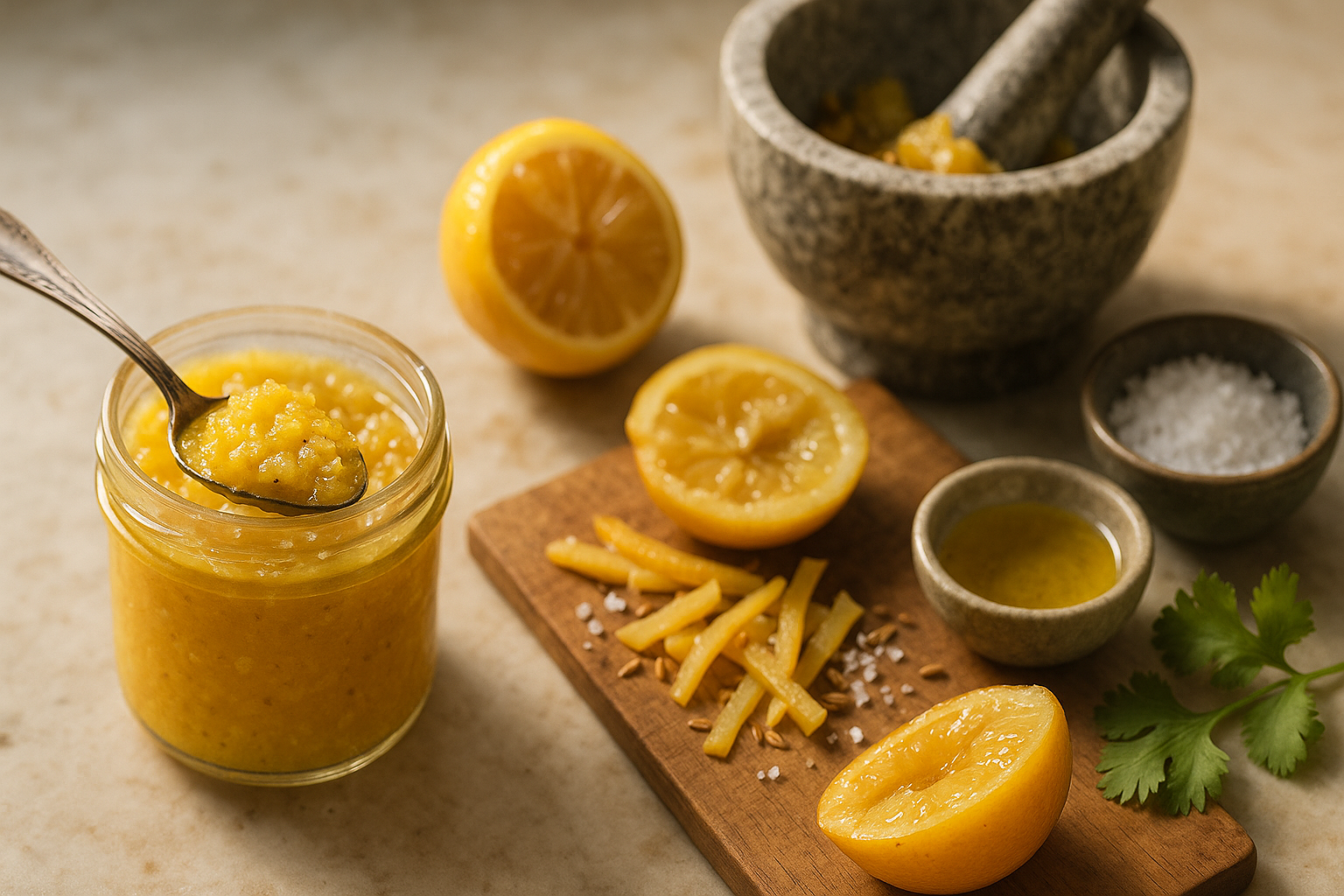
Preserved lemon paste is a smooth blend of salt-cured lemon peel and pulp that delivers concentrated citrus, brine, and umami. You can make it in minutes with jarred lemons or cure your own, then blend, adjust, and store.
One teaspoon can flip a dull soup from flat to electric, yet many cooks avoid it because curing sounds fussy and bitter pith feels intimidating. The surprise is that the blender does almost all the work, and a rinse of the peel is the only real decision point. If you have jarred lemons, learning how to make preserved lemon paste takes 10 minutes; if you’re starting with fresh fruit, the cure does the patient part for you over a few weeks.
"A spoonful of preserved lemon paste carries salt, acid, and citrus oil in equal measure, so it lifts flavor the way anchovies or miso do—without adding fish or soy."
At a glance
If you already have preserved lemons, the paste takes about 10 minutes; curing lemons from fresh takes 3 to 4 weeks before blending. Expect about 1 cup of paste from 3 to 4 lemons.
The core move is rinse, blend, adjust, and pack—a simple sequence that prioritizes taste over rules. This condiment is powerful and forgiving: you can dial salt, bitterness, and brightness in small additions that change a dish dramatically. Use it to season like a chef and you’ll stretch every bite further.
- Prep time: 10 minutes for paste made from jarred preserved lemons; 3 to 4 weeks to preserve lemons from fresh before blending
- Yield: About 1 cup
- Difficulty: Easy
- Core method: Rinse, blend, adjust, pack, store
- Best for: Dressings, marinades, sauces, dips, grains, seafood, chicken, and vegetables
What is preserved lemon paste
Preserved lemon paste is a purée of salt-cured lemon peel and pulp, blended until smooth and spoonable. It tastes intensely citrusy, savory, and slightly bitter, with a mellowed edge from the cure.
Briny depth is the secret reason it plays well with almost everything. Long salting softens pith, perfumes the peel with its own oils, and swaps harsh acidity for a stretched, rounder tang. The result lands somewhere between a citrus condiment and a pantry seasoning.
"Preserved lemon paste distributes flavor more evenly than chopped peel, so a single teaspoon can season a whole salad bowl or pan sauce without hot spots."
Flavor profile and why it works
- Briny, citrusy intensity with mellowed bitterness from long salt curing
- Adds depth similar to anchovies or miso but citrus based and vegan
Paste vs whole preserved lemons
- Paste is pre-puréed and ready to use by the spoonful
- More consistent flavor distribution in sauces, dressings, and marinades
Culinary roots and common cuisines
- North African and Middle Eastern origins, especially Moroccan cooking
- Modern applications in Mediterranean and global pantry cooking
Preserved lemon paste — a blended condiment made from salt-cured lemons, including peel and pulp, used to add briny citrus depth to dishes.
Brine — the salty, lemony liquid left in the preserving jar that can thin and season the paste.
Pith — the white inner layer of the peel; curing softens its bitterness, but excess can still taste harsh if not balanced.
Ingredients and tools you need
You need preserved lemons, a splash of brine or water, and a little olive oil to emulsify; a blender or food processor makes the paste silky in minutes.
Good oil isn’t just for richness; it creates a protective seal that slows oxidation in the jar. Starting with clean tools matters as much as what you put in, because this paste keeps for weeks in the fridge and every spoonful should taste like the first.
Core ingredients
- Preserved lemons: 3 to 4 whole lemons from the jar, including peel and pulp
- Brine from the jar or water: 2 to 4 tablespoons to help blend
- Extra virgin olive oil: 1 to 2 tablespoons for silky texture and protection from air
A short list of add-ins can change the personality of the paste without erasing its origin. Think of them as accents—small amounts go a long way.
Optional add-ins for variations
- Garlic, mild chili, fresh herbs like parsley, cilantro, dill, or mint
- Warm spices like cumin, coriander, turmeric, or a pinch of smoked paprika
- A touch of honey or maple to balance bitterness if desired
- Fresh lemon juice for brightness
If you’re preserving from fresh, the starting choices shape the final flavor. Meyer lemons skew floral and sweet; Lisbon and Eureka are dependable and bright.
Best lemon and salt choices if preserving from fresh
- Lemons: Eureka or Lisbon for classic flavor; Meyer for sweeter, floral notes
- Salt: Coarse kosher or sea salt; avoid iodized table salt to prevent off flavors
Equipment
- High-speed blender or food processor
- Silicone spatula
- Sterilized glass jar with tight lid
- Clean spoon
- Labels for date and contents
"Olive oil does double duty in preserved lemon paste: it smooths the purée and forms a thin oxygen barrier on top, which slows flavor loss during storage."
Step by step: how to make preserved lemon paste from jarred lemons
Rinse the peels lightly, remove seeds, then blend peel and pulp with a little brine and olive oil until smooth; adjust salt, bitterness, and brightness, pack into a clean jar, and top with a thin film of oil.
Small changes at the sink make big changes in the blender. A 5–10 second rinse keeps the lemon’s identity intact; a longer rinse softens the salt hit. Taste early, before any add-ins, so you know exactly what needs balancing.
Step 1 Prepare and rinse
- Remove 3 to 4 preserved lemons from the jar; separate peel from pulp and remove seeds.
- Rinse peels briefly under cool water to reduce excess salt and bitterness; reserve some brine.
Step 2 Balance salt and bitterness
- Taste a small piece of peel; if very salty, rinse more; if too bitter, scrape off a bit of white pith.
"Rinsing for 5 to 10 seconds retains complexity; over-rinsing can flatten the very lemony punch you’re chasing."
Step 3 Blend
- Add peels and pulp to the blender; start with 2 tablespoons brine or water plus 1 tablespoon olive oil.
- Blend until very smooth, scraping down sides as needed.
Step 4 Adjust consistency and flavor
- For thicker paste, add more peel; for looser, add a teaspoon of liquid at a time.
- Adjust brightness with a squeeze of fresh lemon juice.
- Optional flavorings: small garlic clove, pinch of cumin, or fresh herbs.
Step 5 Pack and store
- Spoon paste into a sterilized jar; tap to remove air pockets.
- Smooth the surface and cover with a thin film of olive oil.
- Seal, label, and refrigerate.
To make preserved lemon paste, rinse and seed the lemons, then blend peel and pulp with 2 to 4 tablespoons of brine or water and 1 to 2 tablespoons of olive oil. Purée until velvety. Adjust with more liquid for looseness, fresh juice for brightness, and herbs or spices for character.
From fresh lemons to preserved lemon paste timeline
Curing from fresh takes 3 to 4 weeks: salt-packed lemons soften at room temperature, their peels turn translucent, and the brine intensifies. Once tender, refrigerate, then blend into paste.
You do not need specialized gear, just patience and clean jars. The salt does the structural work, drawing out moisture and taming bitterness, while the lemon’s own acidity guards against unwanted microbes. The biggest variable is time; warm kitchens move faster than cool ones.
Quick overview to preserve lemons first
- Quarter lemons lengthwise without cutting all the way through, pack with coarse salt, and press into a sterilized jar.
- Add extra lemon juice to submerge; weigh down lemons to keep them under liquid.
- Ferment at room temperature out of direct light for 3 to 4 weeks, shaking the jar every day or two.
- When peels are translucent and tender, refrigerate and then proceed to blend into paste using the steps above.
"According to the U.S. Food and Drug Administration (FDA), Clostridium botulinum does not grow below pH 4.6; lemon juice typically measures between pH 2.0 and 2.6, so added vinegar is unnecessary if lemons stay submerged."
Safety notes for home preservation
- Always keep lemons submerged under brine to prevent mold.
- Use clean utensils and sterilized jars; discard if you see fuzzy mold, pink or black growths, or off odors.
"The most common failure point is fruit that rides above the brine; a small weight or clean, food-grade zipper bag filled with brine keeps peels safely submerged."
Flavor variations for preserved lemon paste
Start with a classic paste, then layer in small amounts of spice, herbs, chili, garlic, or sweetener; each add-in shifts the style without erasing the lemon core.
A quarter teaspoon of spice can tilt the paste in a new direction without overwhelming its citrus soul. Think regional accents: warm Moroccan spices, herbaceous green blends, or a smoky garlic turn that plays well with grilling. Measure lightly, blend, taste, then adjust.
Classic Moroccan inspired
- Cumin, coriander, and a hint of turmeric for warmth.
Spicy chili kick
- Blend in Aleppo pepper, red chili flakes, or a little harissa.
Herb packed green
- Add parsley, cilantro, dill, or mint for fresh, vivid color and aroma.
Garlicky and smoky
- 1 small garlic clove and a pinch of smoked paprika.
Meyer lemon sweet floral
- Use preserved Meyer lemons for softer acidity and perfume.
Low oil or no oil
- Skip oil; thin with brine or water and store carefully under brine in the fridge.
"A half teaspoon of ground cumin per cup of paste warms the profile without turning it into a spice paste; the lemon still leads."
How to use preserved lemon paste
Use 1/2 to 1 teaspoon per serving to season dressings, marinades, sauces, grains, seafood, chicken, tofu, and roasted vegetables; add more to taste.
Half a teaspoon often does more than another squeeze of fresh lemon because the paste carries salt, citrus oil, and umami together. Add it early for marinades and rubs; swirl it in late for soups and stews so the aromatics stay bright.
General rule of thumb for quantity
- Start with 0.5 to 1 teaspoon per serving; add more to taste.
Dressings and sauces
- Vinaigrettes with olive oil, Dijon, and herbs.
- Yogurt or tahini sauces for bowls, kebabs, and roasted vegetables.
Marinades and rubs
- Chicken, lamb, fish, tofu; combine with garlic, cumin, and chili.
Soups and stews
- Stir in at the end for brightness in lentil soup, chickpea stews, or fish soups.
Grains, legumes, and carbs
- Toss through couscous, quinoa, rice, or pasta with roasted vegetables.
Dips and spreads
- Hummus, whipped feta, labneh, or white bean dip.
Vegetables and salads
- Roasted cauliflower, carrots, potatoes, or chopped into hearty salads.
"Because preserved lemon paste is a seasoning, not a sauce, a teaspoon can season a full salad or grain bowl without making it taste overtly ‘lemony.’"
Storage, shelf life, and safety
Refrigerate the paste in a sterilized jar, cover the surface with a thin layer of olive oil or brine, and use a clean, dry spoon; it keeps 2 to 3 months chilled or up to 6 months frozen.
Storage is as much about cleanliness as temperature. A thin oil film creates an oxygen buffer, and a clean spoon prevents stray crumbs or moisture from seeding spoilage. Portioning small amounts for the freezer makes it effortless to drop a cube into pan sauces and dressings.
Refrigeration best practices
- Store in a sterilized jar with surface covered by a thin layer of olive oil or brine.
- Always use a clean, dry spoon to avoid contamination.
Shelf life
- Refrigerated: 2 to 3 months if kept covered and clean.
- Frozen: Up to 6 months in ice cube trays or small portions.
Signs to discard
- Mold growth, fizzy texture, gas buildup, or off odors.
"The National Center for Home Food Preservation advises discarding ferments with visible mold rather than scraping it off; surface molds can produce invisible mycotoxins that migrate."
Nutrition and dietary notes
Preserved lemon paste is vegan, gluten-free, and low in calories per teaspoon, but it is intentionally salty; adjust rinsing and dilution to match dietary needs.
Think of it as a flavor concentrate. You’re using drops and dabs, not spoonfuls. The salt delivers savoriness and preservation, but perceived saltiness can be moderated with a brief rinse or by blending in fresh lemon juice and herbs.
Dietary alignment
- Naturally vegan and gluten free; rich in citrus oils and bright flavor with minimal calories per teaspoon.
Sodium awareness
- The paste is salty by design; rinse peels more or blend with fresh lemon juice to reduce perceived saltiness.
"Treat preserved lemon paste like capers or anchovies: small amounts deliver complex seasoning, so you use less overall salt elsewhere in the dish."
Troubleshooting and pro tips
Fix salt by rinsing more or adding fresh juice; tame bitterness by scraping pith or using a touch of sweetener; adjust thickness with more peel or more liquid, and blend longer for smoothness.
A good paste tastes vivid but balanced. You should notice brightness without a sharp edge, salt without a sting, and a slightly creamy body that disappears into sauces. If a batch misses the mark, tiny changes—often a teaspoon at a time—solve it.
Too salty
- Rinse peels more, add fresh lemon juice, or blend in additional pulp.
Too bitter
- Scrape off excess pith, add a pinch of sugar or honey, or blend with sweeter Meyer lemons.
Too thick or too thin
- Thicken with more peel; thin with brine, water, or oil a teaspoon at a time.
Not smooth enough
- Blend longer at high speed; add a small splash of liquid to help emulsify.
Off flavors
- Avoid iodized salt when preserving; use fresh, high-quality olive oil; store under oil or brine.
Pro tips
- Use a digital scale for salt accuracy when preserving from fresh.
- Make small batches for peak freshness; freeze extras in teaspoon portions for easy use.
"A 20–30 second final blend after adjustments transforms a grainy purée into a glossy paste by fully emulsifying citrus oils with brine and olive oil."
Frequently asked questions
Yes, you can make the paste without a blender, and yes, rinsing is optional—but both texture and salt level depend on how you handle the peel and liquid.
Can I make preserved lemon paste without a blender?
You can. Use a food processor or mince peels very finely by hand and mash with a mortar and pestle, adding brine or water gradually. The texture will be rustic, but the flavor is equally potent and sometimes preferable in chunky salads.
Do I have to rinse preserved lemons first?
Rinsing softens the salt and scrubs surface bitterness, but it’s optional. If a dish can accommodate more salinity—like a marinade or a bean stew—use less rinsing and balance with fresh lemon juice at the end.
What oil is best?
A mild extra virgin olive oil gives body and a clean finish. Neutral oils work if you prefer less olive character. Because the oil also protects the surface from air, choose one that tastes good to you straight from the bottle.
How long does preserved lemon paste last in the fridge?
About 2 to 3 months when kept cold, clean, and covered with oil or brine. If you notice mold, fizzing, or off odors, discard the paste. Portioning into smaller jars can help keep the main supply pristine.
Can I freeze preserved lemon paste?
Yes. Portion into ice cube trays, freeze, then store cubes in a freezer bag for up to 6 months. Thaw directly into hot pans or whisk into dressings while still cold.
Is it safe for people on low sodium diets?
It’s high in sodium by design. Consult personalized dietary guidance and use sparingly. Rinse more, blend with fresh lemon juice and herbs, and rely on other low-sodium acids like vinegar in the rest of the dish.
Can I use fresh lemons instead of preserved lemons for paste?
The flavor won’t be the same. Preserved lemons provide briny umami depth that fresh lemons lack. If you’re in a pinch, blend zest, juice, and a pinch of salt, but treat it as a different condiment.
What’s the difference between preserved lemon paste and lemon confit?
Terms vary. Lemon confit may refer to lemons cooked slowly in fat or sugar, while preserved lemon paste is made from salt-cured lemons blended to a spread. Check the recipe’s method to avoid mixing techniques.
Why is my paste bitter?
Excess pith or insufficient curing are common causes. Scrape pith before blending, use Meyer lemons for softer edges, or balance with a touch of sweetener and a squeeze of fresh lemon juice.
Do I need to sterilize jars?
It’s strongly recommended for better shelf life and fewer off flavors. A quick boil or a run through a hot dishwasher cycle helps, and letting jars dry completely prevents residual water from diluting the paste.
Can I add garlic to the jar for storage?
Yes, in small amounts, and keep the jar refrigerated. Garlic shifts the flavor fast, so start with one small clove per cup of paste and plan to finish within the usual 2 to 3 month window.
How much paste should I use in a recipe?
Start with 0.5 to 1 teaspoon per serving. The paste is potent; it’s more like adding miso or anchovy than lemon juice. Increase gradually, tasting after each addition.
"One teaspoon of paste seasons two servings of grains more cleanly than another pinch of salt, because it brings saline, acid, and aromatics in one move."
Conclusion
A small jar of preserved lemon paste does more than season dinner; it rescues leftovers, anchors salad dressings, and unlocks midweek creativity without another grocery run.
There’s an unexpected benefit to keeping it on the door of the fridge: it shortens the distance between impulse and flavor. A tiny spoonful turns yogurt into sauce, pan drippings into gravy, and steamed greens into something worth repeating. In a month of cooking, one patient jar of lemons can teach more about balance than a stack of recipes—and that lesson lasts long after the last teaspoon disappears.