Introduction
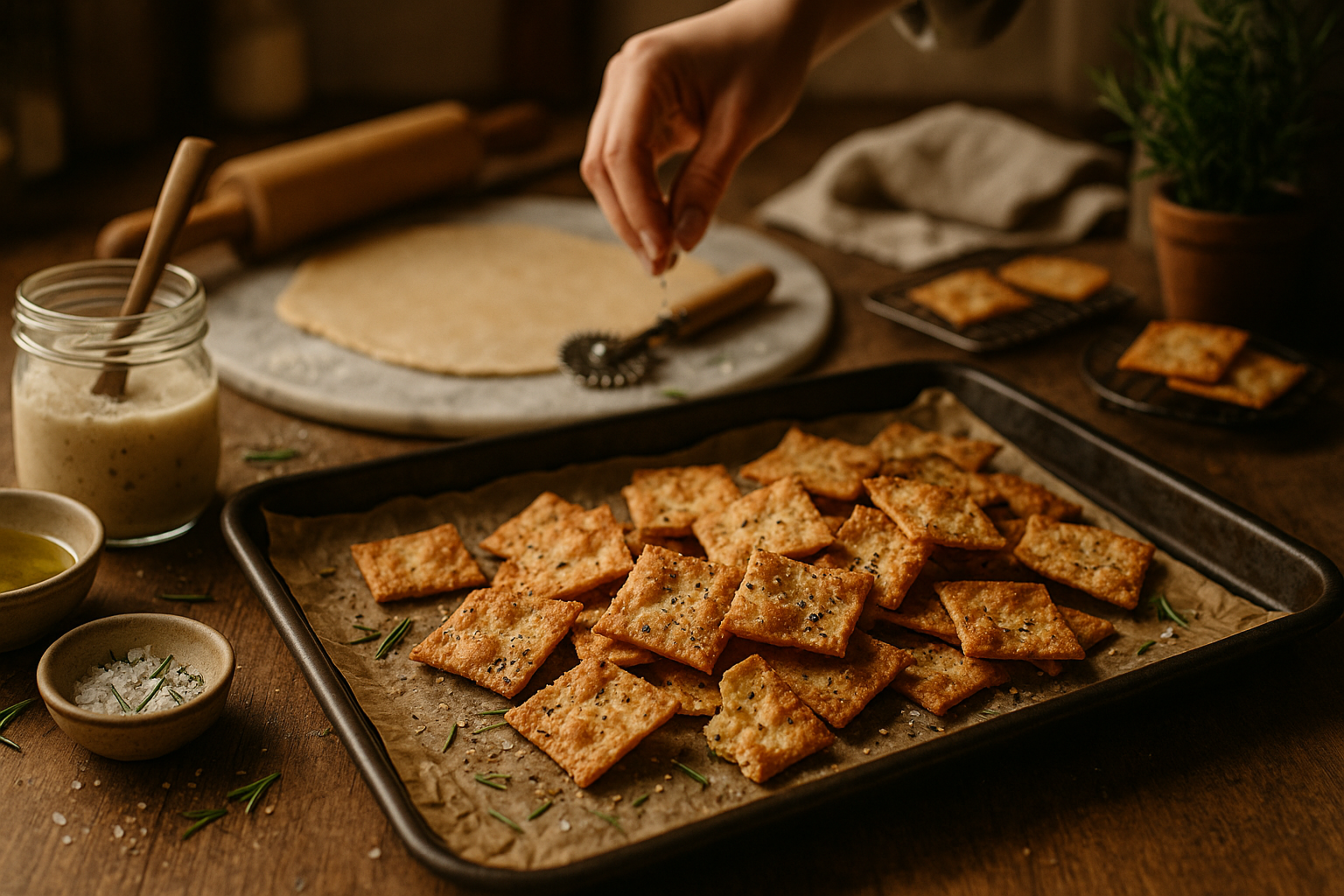
Leftover starter can go from potential waste to a shatteringly crisp snack in under an hour. The secret is thin dough and deep golden color; how to make sourdough discard crackers comes down to just a few precise steps and smart seasoning.
Stir, roll, and bake is the entire rhythm here, which means a beginner can master the technique on the first tray and an experienced baker can riff with herbs, cheese, or seeds. The dough mixes in one bowl, no kneading needed, and the oven does the rest. Expect a clean, tangy finish that pairs beautifully with olive oil and flaky salt. With 10 minutes to mix and 20 to 30 minutes to bake, the only challenge is not eating them all before they cool.
What Is Sourdough Discard and Why It Makes Great Crackers
Sourdough discard is the portion of unfed starter you remove before feeding; it delivers tang, structure, and zero-waste satisfaction to a quick-mix cracker dough. The gentle acidity adds complexity while the flour in the discard contributes body, so you need less work to bring the dough together.
The most useful surprise is how versatile discard is across hydrations. A 100% hydration starter behaves like a thick batter, while 50% hydration is closer to a soft dough; both make excellent crackers with small flour or water adjustments. That mild tang becomes the cracker’s edge, balancing richer toppings like parmesan or toasted sesame. Rolling thin and baking until the edges are deeply golden lock in the defining snap.
Sourdough discard — the unfed portion of a starter removed before feeding, containing flour, water, wild yeast, and bacteria; tangy and functional in baked goods, especially quick-mix crackers.
Flavor-wise, discard leans savory, which makes it a natural platform for dried garlic, onion, rosemary, and black pepper. If your discard is very old and sharp, blend it with fresher discard or temper with a pinch of sugar for balance. Room-temperature or cold discard both work; temperature only affects how quickly the dough relaxes during the brief rest.
"Thin dough and deep color matter more than your flour brand for crispness; even hydration and an extra few minutes in the oven determine the final snap."
Quick Answer Summary for Featured Snippet
Make ultra-crispy crackers by mixing discard, flour, oil, and salt into a soft dough, rolling to 1–2 mm, and baking until edges are deeply golden, then cooling fully on a rack. The key controls are thinness, bake temperature, and complete cooling.
A fast method keeps ratios simple and technique repeatable. Heat the oven to 350–375°F (175–190°C). Mix 200 g sourdough discard, 120 g all-purpose flour, 30 g olive oil, 4 g fine salt, and 10–20 g water until a soft, non-sticky dough forms. Rest 10 minutes, roll to 1–2 mm on parchment, brush lightly with oil, season, dock, and cut. Bake 18–25 minutes, rotating pans halfway, until the edges are deep golden. Cool fully on a rack before storing to lock in crispness.
- Heat oven to 350 to 375°F (175 to 190°C) and line two sheet pans with parchment.
- Mix 200 g sourdough discard, 120 g all-purpose flour, 30 g olive oil, 4 g fine salt, and 10–20 g water as needed for a soft, non-sticky dough.
- Rest 10 minutes, then divide and roll each piece very thin, about 1–2 mm.
- Transfer to pans, brush lightly with oil, sprinkle salt or seasonings, and dock with a fork.
- Cut into crackers or bake as one sheet.
- Bake 18–25 minutes, rotating pans halfway, until deeply golden at edges.
- Cool completely on a rack to set the crunch.
Rolling ultra thin and baking to deep gold are the non-negotiables for a lasting snap. Cooling on a rack is the final insurance policy against bendy crackers.
"For consistent results, think in ratios: roughly 2 parts discard to 1 part flour by weight plus 15% oil, then adjust with a splash of water for a soft, rollable dough."
Ingredients and Best Substitutions
Use a simple base—discard, flour, oil, salt, and a splash of water—then build flavor with seeds, herbs, or hard cheese. The base formula works across starter hydrations; add water for thick discard or a dusting of flour for thin.
The core dough is minimal on purpose so seasoning can do the heavy lifting. All-purpose or bread flour both snap cleanly; bread flour adds a slightly firmer bite due to higher protein. Olive oil softens edges and carries aromatics, while fine salt seasons evenly through the dough. That last splash of water is the adjuster that brings the dough from shaggy to smooth.
- Sourdough discard: 200 g; unfed or recently fed both work; adjust flour to account for thinner discard.
- Flour: 120 g all-purpose for balance or bread flour for a crisper snap.
- Fat: 30 g extra-virgin olive oil or a neutral oil for a subtler profile.
- Salt: 4 g fine sea salt in the dough; flaky salt for finishing.
- Water: 10–20 g to adjust consistency.
Seasonings and mix-ins can sharpen or mellow the cracker’s tang. Hard cheese like finely grated parmesan brings umami and browns quickly; seeds add texture and nuttiness. A touch of sugar or honey encourages color, especially if you prefer a paler bake.
- Sweetness balance: 5 g sugar or honey for extra browning (optional).
- Seeds: sesame, poppy, chia, sunflower.
- Hard cheese: 15–30 g finely grated parmesan or pecorino.
- Dried aromatics: garlic or onion powder, smoked paprika, rosemary, thyme, chili flakes, or za’atar.
For dietary needs, gluten-free flours can mimic the texture with a 1:1 blend; if the blend lacks xanthan gum, add 2 g to help cohesion. Whole-grain swaps up to 50% taste toasty but drink more water; build in 10–20 g extra. Oil keeps things dairy-free and vegan, and nutritional yeast can stand in for cheese.
Equipment and Prep
Two sheet pans, parchment, a rolling pin or pasta roller, and a fork are the only essentials; a digital scale improves repeatable crispness. Consistency in thinness—not gadgetry—drives even browning and snap.
Rolling directly on parchment solves sticking and makes transferring to pans seamless. A bench scraper or pizza wheel speeds up cutting, and a fork prevents large bubbles by docking across the surface. For ultra-thin sheets, a pasta roller at about setting 6 mimics professional lamination, and the dough’s light oil content keeps it supple.
"According to America’s Test Kitchen, many home ovens run off by 25°F or more, so an oven thermometer matters more to crisp crackers than almost any other accessory."
Preheat thoroughly so the dough starts drying immediately, not steaming. If using whole grains, extend the rest to 20 minutes so bran hydrates and the dough rolls without tearing. Keep toppings fine or grated; large chunks create weak spots that bend instead of snap.
Step by Step Method for Sourdough Discard Crackers
Mix to a soft, non-sticky dough, rest briefly, roll to 1–2 mm, season and dock, then bake until the edges are deeply golden and cool completely. Each step shapes texture—especially thinness and final color.
Mix and Hydrate the Dough
Whisk discard, oil, and salt until smooth, then stir in the flour. Add just enough water to form a soft dough that cleans the bowl and your hands. The target texture is medium-firm and pliable, not stiff. Too dry and it will crack when rolled; too wet and it will resist thin sheets.
Rest the Dough Briefly
Cover the dough and rest 10 minutes so the flour hydrates and gluten relaxes. This short pause makes the dough rollable without springing back. With whole-wheat or spelt flours, rest closer to 20 minutes; the bran takes longer to drink up moisture.
Roll Ultra Thin
Divide the dough in two for easier handling. Roll each portion directly on parchment to about 1–2 mm—near translucent. If using a pasta machine, start thick and work down to setting 6 or similar. Uniform thinness bakes evenly and prevents burnt edges with pale centers.
Season, Dock, and Cut
Brush the surface lightly with oil (or water) so seeds and spices adhere, then sprinkle fine salt and your chosen toppings. Dock all over with a fork so steam can escape; this avoids large blisters that chew rather than crack. Cut into squares, diamonds, or long shards with a wheel or knife.
Bake to Deep Golden
Bake at 350–375°F (175–190°C) for 18–25 minutes, rotating pans halfway. Look for deep golden edges and a matte center with no visible moisture. If some pieces brown faster, pull those and return the rest to finish—color is flavor and crunch.
Cool and Crisp
Slide the parchment onto a rack and cool completely. Crispness finalizes during cooling as residual steam escapes from the crumb. Store only after the crackers feel dry and snappy in the hand.
"Harold McGee notes in On Food and Cooking that dry heat and water loss drive crisp textures; letting crackers cool on a rack is when their final crunch actually sets."
Flavor Variations and Seasoning Ideas
Use a light brush of oil to anchor bold seasonings, then keep toppings fine so they don’t puncture the thin sheets. Strong, savory blends play well with the discard’s tang, while a sweet-salty note can be equally compelling.
Start with a small batch of a new blend to learn how it browns. Ground spices darken faster than seeds; cheese should be finely grated for even melt and added sparingly. If using heat-forward spices like chili flakes, balance with sesame or poppy for texture so the bite reads layered, not harsh. A squeeze of lemon zest over herbs like thyme or Herbes de Provence lifts the whole pan.
- Everything seasoning with sesame, poppy, dried onion, dried garlic, and flaky salt.
- Rosemary and sea salt with olive oil.
- Cheddar or parmesan with cracked black pepper.
- Sesame-chili with toasted sesame oil and chili flakes.
- Herbes de Provence with lemon zest.
- Smoked paprika and cumin.
- Za’atar with olive oil.
- Sweet-salty maple and cracked pepper: brush very thinly with maple, finish with pepper and a pinch of flaky salt.
Seeds, herbs, and cheese change bake behavior, so watch color rather than time. Cheese-heavy pans often finish a minute or two earlier, while seed-crusted sheets may need the full window for thorough drying.
Pro Tips for Thin, Ultra Crispy Crackers
Roll thinner than instinct says, aim for a translucent sheet, and bake to deep gold; those two cues guarantee crunch. Rotating pans halfway evens heat and color, which is essential in home ovens.
A pasta roller makes thinness and uniformity effortless, but a rolling pin is enough if you can see the parchment’s pattern through the dough. Dock generously to release steam and prevent bubbles. If edges brown first, trim them off to cool and return the sheet to finish; this saves the center from underbaking.
- Roll to 1–2 mm; thinner bakes faster and crisper.
- Use parchment for even browning and easy release.
- Preheat thoroughly; a hot start dries the surface quickly.
- Dock all over with a fork to reduce puffing.
- Bake until deeper golden than cookies; color equals crunch.
- Recrisp soft crackers at 300°F (150°C) for 5–7 minutes.
"According to King Arthur Baking, the surest path to shatteringly crisp crackers is rolling as thin as a playing card and baking until the edges are a shade darker than gold."
Troubleshooting Guide
Chewy or pale crackers come from thick dough or underbaking; uneven color points to uneven rolling or heat. Most issues resolve with thinner sheets, a hotter preheat, or a minute or two more in the oven.
If crackers bend, they’re not dry enough—color needs to be confident, not timid. When edges scorch while centers lag, it usually means the center is thicker. Try rolling with a pasta machine or increase attention to even pressure. Very old discard can taste bitter; either refresh it or balance with a pinch of sugar.
- Chewy texture: roll thinner and bake to deep golden.
- Uneven browning: rotate pans and swap racks; roll more evenly.
- Bitter flavor: blend old discard 50/50 with fresh or add a pinch of sugar; avoid overbaking to dark brown.
- Sticking: always use parchment or a light dusting of flour.
- Burnt edges, pale center: edges are thinner; pull edge pieces early and finish the middle.
A little practice dials in your oven’s sweet spot. Once you learn how your pans color, the whole process becomes muscle memory.
Storage, Shelf Life, and Make Ahead
Cool completely, then store airtight for 1–2 weeks; recrisp briefly if humidity softens the snap. Dry storage preserves texture; moisture is the only enemy here.
Let the trays cool to room temperature before sealing. In humid climates, a food-safe silica gel packet in the container helps maintain crunch. For freezer storage, cool fully and freeze in bags or boxes for up to two months; a quick 5-minute pass at 300°F (150°C) wakes them up beautifully.
- Room temperature: airtight for 7–14 days.
- Humidity control: add a packet to prevent softening.
- Freezer: up to 2 months; recrisp before serving.
- Make-ahead dough: refrigerate, tightly wrapped, for 24 hours; bring to room temp before rolling.
"Crispness is a moisture equation: airtight storage keeps water out, and a five-minute low bake drives it back out when the weather sneaks it in."
Nutrition and Dietary Notes
These crackers can be dairy-free, whole-grain, or gluten-free with thoughtful swaps; texture depends on hydration and bake rather than dairy or eggs. Oil keeps them tender, while whole grains add fiber and a nutty finish.
The base dough is naturally dairy-free if you skip cheese. A 50% whole-wheat swap brings toasty flavor but needs a touch more water and a slightly longer rest for smooth rolling. A quality 1:1 gluten-free blend produces excellent results if you roll gently and dock well to prevent bubbles.
Lower the sodium by reducing fine salt in the dough to 2 g and skipping the flaky finishing salt. For a cheese-like savory note without dairy, stir in nutritional yeast; it browns lightly and adds umami.
Serving and Pairing Ideas
Treat these like a versatile canvas—salty, tangy, and sturdy enough for dips, cheese, and toppings. Their crisp texture stands up to creamy spreads and keeps crunch in soups and salads.
For boards, choose a mix of plain salted crackers and one or two seasoned versions to avoid flavor fatigue. A mild rosemary-salt batch plays nicely with soft cheeses, while a black pepper–parmesan sheet loves aged cheddar or salumi. For lighter snacks, pair with hummus or whipped ricotta and a drizzle of olive oil.
- Cheese and charcuterie boards with contrast: soft-rind cheeses, aged cheddar, prosciutto.
- Dips: hummus, baba ganoush, whipped ricotta, spinach-artichoke.
- Soups and salads: crumble as a crouton replacement.
- Smoked fish: top with herbed cream cheese and capers.
- Sweet snacks: nut butter, honey, and a pinch of flaky salt.
A little lemon zest or fresh herb while plating adds aroma that travels faster than flavor, setting the palate for what’s next.
Scaling the Recipe and Yield
Expect about 60–80 small crackers from 200 g discard; scale by weight to maintain texture and seasoning. Thinner sheets yield more pieces and bake faster.
Doubling or tripling the formula is straightforward if you measure by grams. Work in batches so each sheet rolls to 1–2 mm without crowding, and rotate pans for even color. With larger batches, keep the unused dough covered to prevent drying; a light wrap keeps the surface from cracking during the wait.
- Base yield: 60–80 small crackers from a 200 g discard batch, depending on cut size.
- Scaling: multiply all ingredients by weight for consistency.
- Thickness: thinner equals more pieces and shorter bake time.
"Scale by grams, not cups; when thinness is everything, exact ratios keep texture identical from the first tray to the fifth."
Related Guides to Keep Your Starter Thriving
Strong crackers start with a healthy starter; good maintenance makes discard predictable and easy to bake with. A steady feeding routine builds reliable flavor and hydration.
If you’re refining your sourdough practice, a few focused topics round out skills and expand pairing options. Learning to feed and store a starter reduces waste and keeps discard pleasantly tangy instead of harsh. Homemade seasoning blends bring control over salt and spice. Simple dips give your crackers a natural stage.
- How to feed and maintain a sourdough starter.
- Beginner-friendly guide to creating a new starter from scratch.
- DIY seasoning blends like everything bagel spice or ranch-style mix.
- Creamy spreads to pair: whipped feta, quick hummus, or herbed yogurt.
Frequently Asked Questions
These targeted answers address the most common issues bakers hit when turning discard into crackers. Keep them handy the first couple of bakes, then trust your eyes and color cues.
Q: Can I use unfed sourdough discard for crackers? A: Yes. Unfed discard gives the best flavor and quick mixing since you don’t need lift. If it tastes very sharp, blend with fresher discard or add a pinch of sugar to soften the acidity without muting tang.
Q: What hydration discard works best? A: A 100% hydration discard is the easiest baseline. Thicker, low-hydration discard needs a touch more water; thinner discard may need a light dusting of flour so the dough rolls thin without sticking.
Q: How thin should I roll the dough? A: Aim for 1–2 mm. Thinner sheets bake faster and deliver a cleaner snap. If you can see the parchment pattern faintly through the dough, you’re there.
Q: Do I have to dock the dough? A: Docking is strongly recommended. It vents steam to prevent large bubbles that chew rather than crack, keeping the surface flat and evenly browned.
Q: Can I air fry sourdough discard crackers? A: Yes. Air fry at 320–330°F (160–165°C) for 6–10 minutes, checking often. Work in small batches and weigh down corners with a small rack if the sheet lifts.
Q: How do I keep crackers crisp after baking? A: Cool completely on a rack, then store airtight. If they soften, recrisp at 300°F (150°C) for 5 minutes, cool, and reseal once dry.
Q: Can I make them oil-free? A: Yes, but expect a firmer, less tender bite. Replace oil with water and brush tops with water to help toppings stick; bake to deep golden for maximum crunch.
Q: What flours can I use? A: All-purpose, bread flour, or blends with up to 50% whole wheat or spelt work well. For rye or full whole wheat, add a little more water and expect a heartier snap.
Q: Can I add cheese? A: Yes. Mix 15–30 g finely grated hard cheese into the dough or sprinkle on top in the final 5–8 minutes to prevent scorching while still melting to a crisp finish.
Q: Why are my crackers soft the next day? A: They were underbaked, stored before fully cooling, or exposed to humidity. Recrisp in a low oven for 5 minutes, cool completely, and store airtight with a dryness packet if needed.
Conclusion
Crisp crackers reward boldness: roll thinner than feels safe and bake darker than feels polite, then let the rack do the rest. That small leap turns humble discard into a staple worth planning for.
There’s a bonus use once you’re hooked. The overbaked shards you thought were a mistake become the most flavorful breading for cutlets or a crunchy topping for roasted vegetables. What began as waste control ends up as a pantry move—an edible reminder that restraint and nerve can share the same sheet pan.